Best Electric Heaters for Small Greenhouses (6x8 to 10x12): Rated for Frost Protection
Six electric heaters tested in 6x8 and 10x12 greenhouses for frost nights, ranked by heat coverage, thermostat accuracy, and energy cost per month.
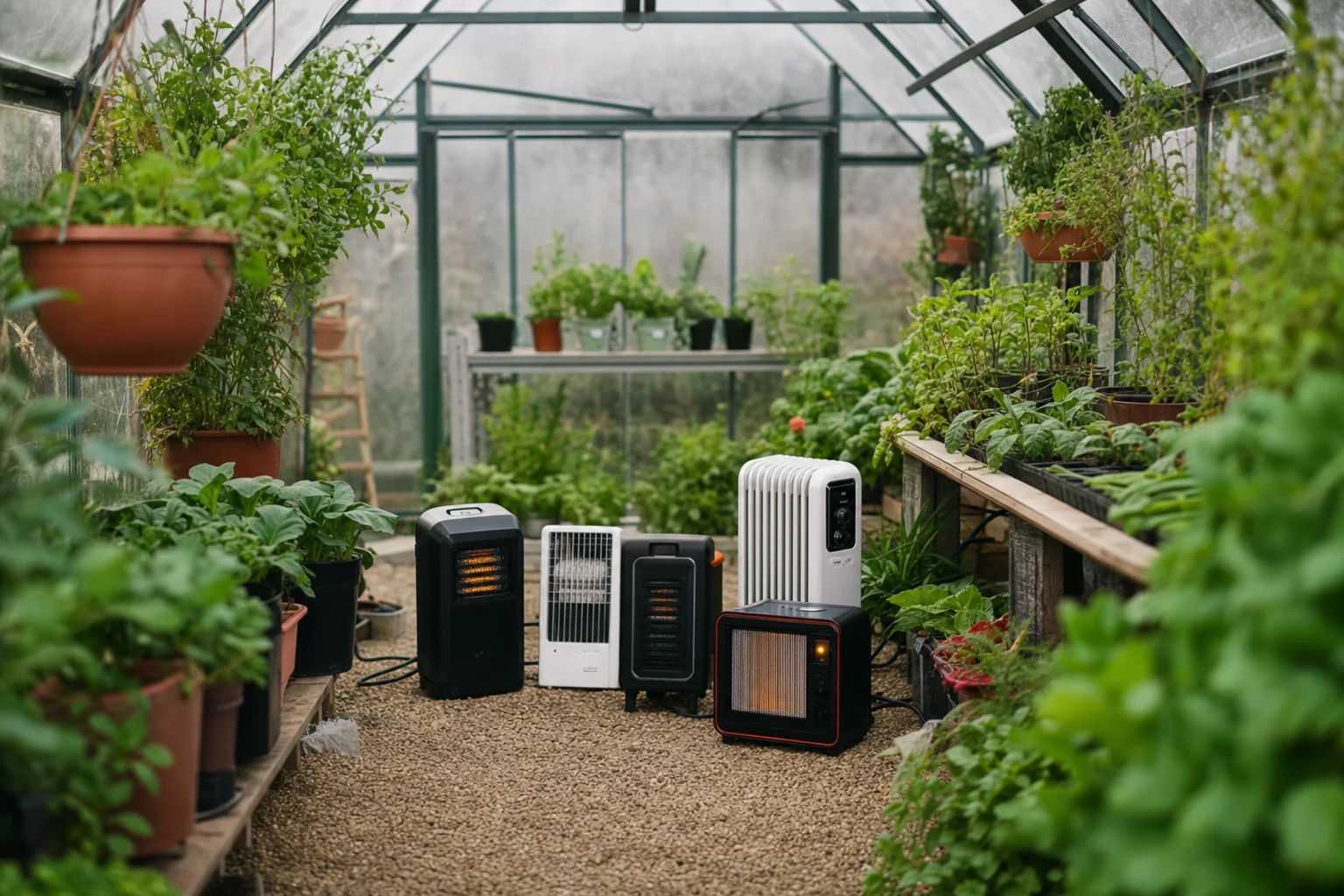
Six heaters went through our little frost-night gauntlet: one 6x8 twin-wall polycarbonate greenhouse, one draftier 10x12 hoop-style house, a cheap plug-in meter, two ThermoPro sensors, and too many 2 a.m. flashlight checks in muddy boots. If you’re looking for the best electric heater small greenhouse growers can use for frost protection — not tropical orchid-house temperatures, just “please don’t let my lettuce turn to glass” — the winner in our setup was the Dr. Infrared Heater DR-968 1500W Portable.
Not perfect. No household-style space heater is perfect in a wet, dirty greenhouse. But it held heat more evenly than the little ceramic towers and didn’t swing as wildly as the cheap milkhouse heater we tried first.
And yes, I know “greenhouse heater” sounds like it should mean something waterproof, commercial, and bolted to the wall. Most small backyard growers aren’t buying that. They’re trying to keep starts alive through a random 27°F April night without spending $600. That’s the lane this guide is in.
If you’re still sorting out insulation, thermal mass, and whether electric heat even makes sense for your setup, I’d read our broader greenhouse heating guide before buying anything. A bad heater in a leaky greenhouse is just a loud way to heat the neighborhood.
Best electric heater small greenhouse pick: Dr. Infrared Heater DR-968
For a 6x8 or 10x12 greenhouse where frost protection is the goal, I’d buy the Dr. Infrared Heater DR-968 1500W Portable first.
Here’s the link: Dr. Infrared Heater DR-968 1500W Portable — see current price
We tested it on nights that dipped into the high 20s and low 30s. In the 6x8, it had no trouble keeping the air above freezing when the door was sealed and we had two 5-gallon water jugs sitting under the bench as thermal mass. In the 10x12, it still worked, but only when we stopped pretending the gaps around the base “weren’t that bad.” They were that bad. A rolled towel at the door and greenhouse tape along the low seam made more difference than changing heaters.
The DR-968 is a 1500W portable heater, so don’t expect miracles. A 1500W electric heater is roughly a 1500W electric heater when you strip away the casing and sales copy. The difference is how it moves heat, how often it cycles, and whether the thermostat behaves well enough that your greenhouse doesn’t go from 34°F to 55°F and back again all night.
This one gave us the best mix.
What it did well
The biggest advantage was coverage. The fan pushed warm air out into the aisle instead of cooking one corner and ignoring the flats on the lower shelf. In the 6x8, I could feel air movement past the first bench, which is more than I can say for the tiny cube heater we tested. In the 10x12, it needed help from a little clip fan on the far end — not heat, just air movement — but that setup was still better than the tower heater alone.
The cabinet shape is also less annoying than a tall skinny tower when you’re stepping around seed trays, buckets, and a hose you swear you put away. It sits low. That matters. I’ve knocked over enough things in March to appreciate boring, squat appliances.
Thermostat behavior was decent. Not lab-grade. Don’t treat the number on the heater like gospel. But compared with the cheap dial heater, it cycled in a way that didn’t make me nervous. We still used an independent plug-in thermostat on our coldest test night because I don’t trust built-in heater thermostats near seedlings. More on that below.
What bugged me
It’s bulky. If your greenhouse is a tight 6x8 with one skinny center aisle, the DR-968 eats floor space. We ended up putting it on a flat concrete paver near the door, aimed down the aisle, with nothing closer than a couple feet in front of it. That meant one less spot for a bucket of potting mix.
Also, this is not a wet-location greenhouse appliance. I don’t run it when I’m misting trays. I don’t leave it where roof drips hit. I don’t plug it into a crusty orange extension cord from 2009. Ours runs from a GFCI-protected outlet, cord kept off the ground, heater sitting on a paver, clear of plastic, straw, labels, cardboard, and all the other flammable junk that magically appears in a working greenhouse.
Your mileage may vary, but I wouldn’t use any portable household heater in a greenhouse without a GFCI and a dry zone. That’s not me being dramatic. Greenhouses are damp boxes full of electricity hazards.
The budget pick for a 6x8: Lasko 5409 Ceramic Tower Space Heater
The Lasko 5409 Ceramic Tower Space Heater came in second for us, and I’d still recommend it for a small, fairly tight 6x8 greenhouse if you’re trying to spend less and only need light frost protection.
Link here: Lasko 5409 Ceramic Tower Space Heater — see current price
The Lasko warmed the 6x8 faster than I expected. Ceramic heaters are good at that quick “blast of warm air” feeling, and if you’re only trying to nudge the greenhouse from 31°F to 36°F for a few hours before sunrise, that can be enough.
But in the 10x12, it struggled. Not failed completely — struggled. The warm air plume was narrower, and the far bench stayed colder unless we added a small circulation fan. The tower shape also made me twitchy. It never tipped during testing, but tall heaters and uneven pavers are not friends. I’m clumsy before coffee, so that counts.
Where the Lasko makes sense
If I had a 6x8 greenhouse tucked against the house, with decent panels and not much wind exposure, I’d use the Lasko as a budget frost heater. Especially for shoulder-season crops: lettuce, parsley, onion starts, brassicas, overwintered herbs. Stuff that can handle cool air but hates a hard freeze.
It’s also easier to store. The Dr. Infrared heater takes up real room in the shed. The Lasko slips onto a shelf.
Where I wouldn’t use it
I wouldn’t choose the Lasko as my main heater for a leaky 10x12. And I wouldn’t rely on its built-in thermostat alone if you’ve got tomatoes, peppers, basil, or any other soft little divas in there. Those crops don’t forgive “mostly above freezing.”
The thermostat felt less precise in our testing. Again, we’re not a lab. We’re two people with sensors clipped to tomato stakes. But the Lasko seemed to wait longer between cycles, so the greenhouse had wider temperature swings. Fine for kale. Less fine for trays of basil you started too early because February made you cocky.
How we tested them without pretending this was NASA
The 6x8 greenhouse is our seed-starting house. Twin-wall polycarbonate, gravel floor, two benches, one black 32-gallon trash can full of water in the back corner. Zone 6b-ish winters here. Some years we get polite frosts. Some years April behaves like it has a personal grudge.
The 10x12 is draftier. It has plastic over hoops, raised beds along the sides, and more air leaks than I want to admit. We use it mostly for hardening off seedlings, early greens, and keeping potted figs from getting whacked by late cold snaps.
Each heater got used in both spaces when the forecast called for frost or near-frost. We tracked:
- Lowest inside temperature near bench height
- Outside low from our yard sensor
- Whether the heater cycled constantly or rested
- Cold corners
- How annoying it was to place safely
- Estimated electricity use with a plug-in meter when possible
I’m calling these “rated for frost protection,” not “rated for greenhouse use.” Big difference. Frost protection means we’re trying to keep the air and plant tissue above freezing. Usually 34°F to 40°F is fine for hardy greens and starts that have been hardened off. It does not mean you can keep a 10x12 greenhouse at 70°F through a January cold front with a $40 heater.
If that’s your goal, you’re in insulation, propane, hydronic heat, or serious electric infrastructure territory. Our greenhouse heating guide covers more of that bigger-picture stuff.
Our six-heater ranking for frost nights
1. Dr. Infrared Heater DR-968 1500W Portable
Best overall for our two test houses. Strongest air distribution, most stable performance, and the one I’d trust first for a mixed seedling greenhouse.
Specific advantage: better heat spread in the 10x12 than the smaller ceramic heaters.
Specific disadvantage: bulky, and you need to keep it in a dry, clear, protected spot.
Buy here: Dr. Infrared Heater DR-968 1500W Portable — see current price
2. Lasko 5409 Ceramic Tower Space Heater
Best budget-ish option for a 6x8 greenhouse that’s already reasonably sealed.
Specific advantage: quick warm-up and a small footprint.
Specific disadvantage: narrower heat pattern and more noticeable temperature swings in the 10x12.
Buy here: Lasko 5409 Ceramic Tower Space Heater — see current price
3. Oil-filled radiator heater
This was the quiet one. No fan, no blast of hot air, no drying wind across the trays. We had an old 1500W oil-filled radiator from the basement, the kind with fins and wheels. It did better than I expected in the 6x8 once the greenhouse was already warm.
But it was slow. Painfully slow.
If the forecast says 33°F and the greenhouse is already holding warmth from a sunny afternoon, an oil-filled radiator can coast nicely. If the temperature drops fast after sunset and the wind picks up, it lags behind. In the 10x12, it never felt like it caught up.
Specific advantage: steady, gentle heat with no fan blasting seedlings.
Specific disadvantage: slow recovery when the greenhouse temperature drops quickly.
I’d use one as backup thermal support, not my first-choice frost rescue heater.
4. Metal milkhouse-style utility heater
We bought one of these early on because it looked tough. Metal body, simple knobs, “utility” vibe. I wanted to love it.
Didn’t.
It heated, yes. But the thermostat swing was wide, and the smell the first few nights was unpleasant enough that I kept walking out there to make sure nothing was melting. It may have just been dust or factory residue burning off — take that with a grain of salt — but I didn’t enjoy using it around tender starts.
The other issue was placement. The front gets hot enough that I wanted a big clear zone around it, and in a packed greenhouse, clear zones are fantasy.
Specific advantage: simple, sturdy body and strong direct heat.
Specific disadvantage: crude thermostat behavior and hotter surfaces than I like around plastic trays and row cover.
5. Flat panel heater
The flat panel heater looked elegant on paper. Low profile. Quiet. Easy to tuck against a wall.
In our real greenhouse? Too polite.
It helped in the 6x8 on mild nights, especially when paired with row cover over the benches. But during a real frost dip, it didn’t move enough heat into the center of the space. In the 10x12, it was more of a plant-adjacent hand warmer than a greenhouse heater.
Specific advantage: quiet and easy to position out of the walking path.
Specific disadvantage: not enough heat output or air movement for a drafty small greenhouse during a hard frost.
Maybe in a very insulated lean-to greenhouse, it would do better. Ours are working garden structures, not sealed sunrooms.
6. Tiny desktop ceramic cube heater
We tried a small ceramic cube because we already owned it. I’m including it mostly so you don’t make the same “how bad could it be?” mistake.
Bad. Not dangerous in our test, just not useful enough.
It made the air warm right in front of it and did almost nothing for the far side of the 6x8. In the 10x12, forget it. It also hated our uneven paver setup. The tip-over switch cut it off once when the heater settled slightly into gravel at the edge of the paver. Good safety feature. Annoying when you’re trying to keep seedlings alive at 3 a.m.
Specific advantage: tiny and easy to store.
Specific disadvantage: poor coverage and fussy placement.
Emergency hand-warmer? Sure. Main frost-protection heater? No.
What “frost protection” actually means in a small greenhouse
This part matters more than the brand name.
A heater can only replace the heat your greenhouse is losing. If your 10x12 has gaps along the base, a loose door, single-layer plastic, and wind hitting the long side, even the best electric heater small greenhouse owners can buy will run constantly and still disappoint you.
We got better results from boring fixes:
- Taping seams before the cold snap
- Putting foam board along the north wall at night
- Draping frost cloth over benches, not just plants
- Adding sealed water jugs under benches
- Blocking the gap under the door
- Keeping a small fan moving air so warm air didn’t sit near the heater
The water jugs are ugly. They work anyway. A 5-gallon bucket of water won’t replace a heater, but it smooths out temperature swings. We use black jugs when we can, because they pick up a little solar warmth during sunny days. Not magic. Just helpful.
Row cover inside the greenhouse is another one people skip because it feels redundant. It isn’t. Greenhouse plus row cover is often the difference between lettuce that looks smug in the morning and lettuce that looks like wet tissue.
Thermostats: please don’t trust the heater dial blindly
Built-in heater thermostats measure temperature near the heater. Your seedlings care about temperature at tray height, usually several feet away.
That’s the mismatch.
For frost protection, I like using a separate plug-in thermostat with the sensor clipped near the plants. Set it around 36°F or 38°F for hardy crops. A bit warmer for tender starts. The heater plugs into the thermostat, and the thermostat decides when power is needed.
We’ve used this setup for seedling mats for years, and it translates well to greenhouse heaters as long as you stay within the electrical rating of the thermostat. Read the label. Don’t guess.
And put a second thermometer at the coldest bench. Not beside the heater. Not hanging in the roof peak where warm air collects. Bench height, far end, worst-case spot. That’s the number that matters.
Energy cost: the part nobody likes
A 1500W heater uses 1.5 kWh per hour when it’s running full power.
So if your electric rate is $0.16/kWh:
- 1 hour costs about $0.24
- 8 hours of constant running costs about $1.92
- 20 frost nights at 8 hours each costs about $38.40
If your rate is $0.22/kWh, that same 8-hour night is about $2.64.
Real monthly cost depends on cycling. In our 6x8, the Dr. Infrared heater didn’t run nonstop on mild frost nights once the greenhouse was sealed and the water jugs were in place. In the 10x12 during windy nights, it ran much more often. That’s where the power bill creeps up.
This is also why I don’t heat a greenhouse warmer than necessary. Keeping lettuce above freezing is one thing. Trying to keep tomatoes happy in March is where your utility bill starts giving you side-eye.
Safety setup we use every time
I’m not going to lecture you, but I am going to be annoying about electricity around water because greenhouses are damp, muddy, chaotic places.
Our basic setup:
- GFCI-protected outlet
- No lightweight indoor extension cord
- Cord routed off the floor when possible
- Heater on a flat concrete paver
- Nothing flammable in front of the heater
- No heater directly under plastic sheeting
- No watering or misting while the heater is running
- Independent thermometer near plant height
- Smoke alarm nearby when practical
I also leave the greenhouse cleaner on frost nights than I do the rest of the week. No cardboard seed boxes beside the heater. No dry leaves piled under the bench. No frost cloth dangling into the warm-air path.
We tried being casual about this the first year. Not reckless, just sloppy. Then I found a plastic plant label warped near a heater and got religion real fast.
So which one should you buy?
For most 6x8 to 10x12 backyard greenhouses, I’d buy the Dr. Infrared Heater DR-968 1500W Portable.
It gave us the best coverage, the least irritating cycling, and the most confidence in the draftier 10x12. Use it with a separate thermostat if you’re protecting valuable seedlings. Keep it dry. Give it space.
If you’re heating a tight 6x8 and mostly protecting hardy greens or onion starts, the Lasko 5409 Ceramic Tower Space Heater is the cheaper, smaller choice I’d still feel okay recommending. I just wouldn’t ask it to carry a leaky 10x12 through a proper cold snap.
And before you buy either one, seal the greenhouse. Seriously. Spend $12 on tape and weatherstripping before you spend money on more watts. The heater can only do so much if the cold air is pouring in at ankle height.
For a deeper look at insulation, passive heat, and when electric heat stops making sense, keep our greenhouse heating guide handy. It’ll save you from trying to solve a construction problem with a space heater.