Best Greenhouse Heater 2026
Five greenhouse heaters tested through a Zone 5 winter. Electric, propane,. Compared after full-season use so you skip the affiliate fluff and wasted gear.
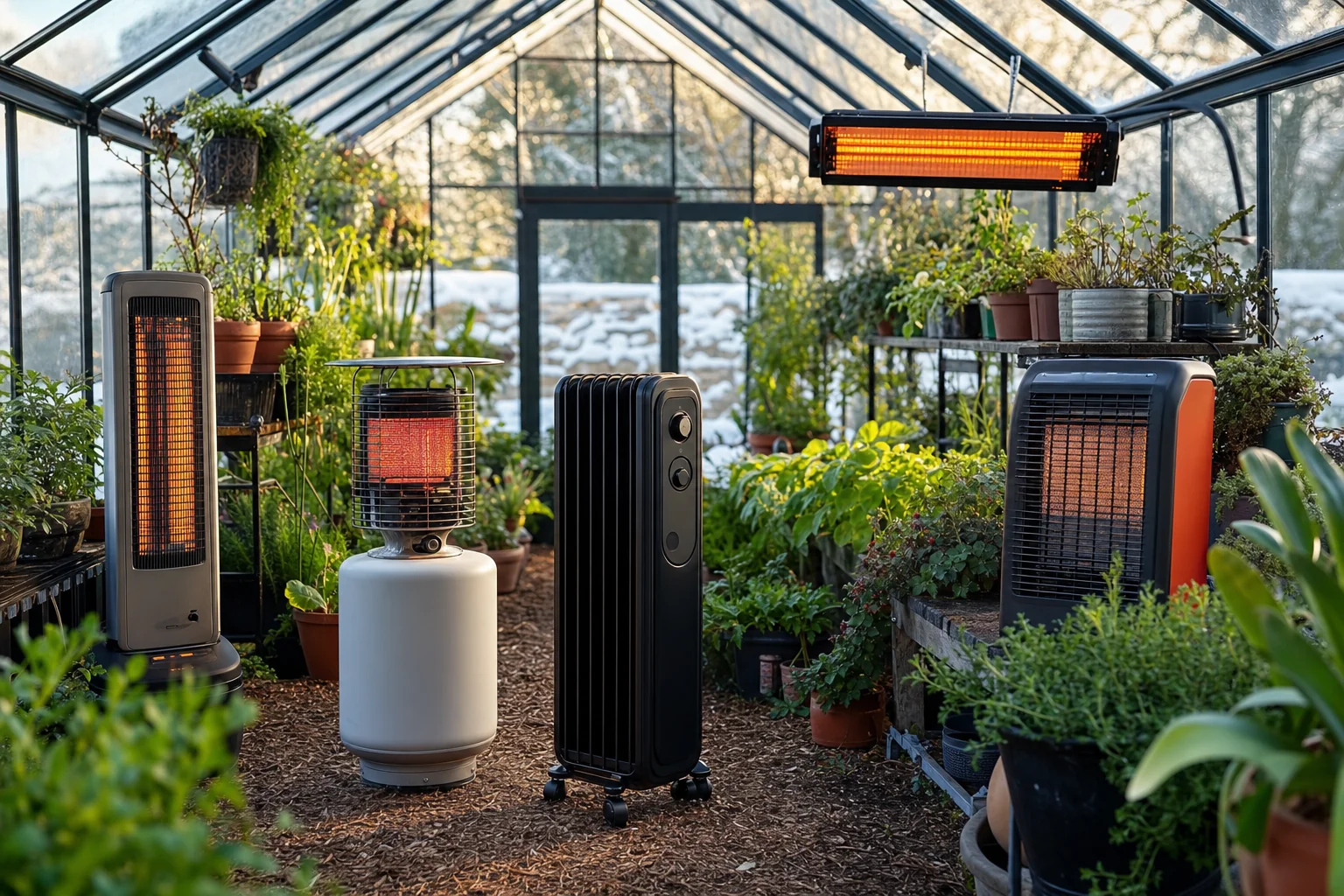
I started this test because our little greenhouse kept doing the most annoying winter thing: staying fine until about 3:40 a.m., then dropping like a rock right before sunrise. If you’re hunting for the best greenhouse heater 2026 pick, that’s the hour that matters. Not the sunny 2 p.m. reading. Not the “it feels warm in here” moment after you’ve been hauling compost. The heater has to keep basil from turning black, keep lettuce from freezing at the edges, and not melt a hole in your polycarbonate when nobody’s watching.
We tested five heater setups through a Zone 5 winter in an 8x12 backyard greenhouse. Nothing fancy. Twin-wall polycarbonate, gravel floor, two benches, water barrels along the north wall, and too many seed trays because I always think I’ll start fewer tomatoes and then absolutely do not.
The short version: for a grid-powered greenhouse, I’d buy the Dr. Infrared Heater DR-968 1500W again. For outages, hoop houses without power, or emergency freeze nights, the Mr. Heater F274800 Big Buddy Portable Propane Heater earned its shelf space — but I would not run propane as my everyday greenhouse heat unless I had ventilation and monitoring nailed down.
And yes, we made some dumb mistakes first.
The best greenhouse heater 2026 pick from our winter test
Our main pick is the Dr. Infrared Heater DR-968 1500W because it was the easiest to live with, the least fussy overnight, and the safest-feeling option around seedlings once we paired it with a plug-in thermostat.
That last part matters. I wouldn’t run any 1500W electric heater in a greenhouse by just turning the knob and hoping. We used an Inkbird-style thermostat controller with the probe clipped at plant-canopy height, not hanging from the ceiling where it reads nonsense. The heater sat on a 16x16 concrete paver, about 30 inches from the nearest tray.
Was it perfect? No. A 1500W electric heater is still a 1500W electric heater. In real numbers, that’s about 5,118 BTU per hour. If your greenhouse leaks air like an old barn door, it’ll struggle. Our greenhouse held 38–42°F on many nights when the outside temperature sat in the low 20s, but during the worst cold snap, when wind came from the northwest and found every gap I hadn’t taped, it ran hard.
Still, it didn’t dump moisture into the greenhouse. It didn’t need fuel changes at midnight. It didn’t make me nervous the way open-combustion heat does around plastic, frost cloth, and dry plant tags.
For most small greenhouse growers with power available, that’s the win.
If you’re still designing the whole setup — insulation, thermal mass, vents, and where to put the heater — our broader greenhouse heating guide is the place I’d start before buying anything. A heater can only do so much in a sieve.
What we tested — and what got sent to the garage
We tested five setups, not five shiny catalog fantasies.
- Dr. Infrared Heater DR-968 1500W electric infrared-style heater
- Mr. Heater F274800 Big Buddy portable propane heater
- A cheap 1500W ceramic cube heater from a big-box store
- A 1500W oil-filled radiator-style electric heater
- A small wall-mounted infrared panel heater we already had from a mudroom experiment
Only two of those are worth talking about as real buys for most people. The cube heater was noisy and cycled too aggressively. The oil-filled radiator was wonderfully gentle but too slow to recover temperature after we opened the door. The wall-mounted infrared panel warmed whatever was directly in front of it, which was nice for a bench of lettuce and useless for the rest of the space.
We tried them anyway. That’s usually where the truth is.
The ceramic cube heater was the first failure. It technically worked. It also blew hot air in one narrow stripe, dried out the front row of spinach plugs, and made the thermostat short-cycle because the warm blast hit the probe before the rest of the greenhouse warmed up. We moved the probe. Then the heater overheated near the bench leg because I’d boxed it in too tightly. My fault, but still — not a greenhouse-friendly setup.
The oil-filled radiator was better behaved. Quiet. No fan. No direct blast on seedlings. But on a 19°F night, it lagged behind badly. Once the greenhouse dipped below 34°F, it just didn’t recover fast enough. I’d use one in a very well-insulated seed-starting room. Not as my only winter greenhouse heater.
The infrared panel? I wanted to like it. I really did. It made one bench feel cozy and left the far corner cold enough to frost the inside of the polycarbonate. Great for a chicken coop roost? Maybe. For an 8x12 greenhouse full of mixed crops, no.
Electric vs propane vs infrared: what actually mattered
People get tangled up in BTUs, watts, fuel cost, and heater labels. Same here. I had a notebook full of numbers by January and still had to simplify it down to one question:
Did the plants look okay in the morning?
That sounds too basic, but it’s the honest test. Lettuce can handle cold. Basil cannot. Young peppers sulk if you look at them wrong. Overwintered rosemary doesn’t mind 38°F if it’s dry, but give it cold wet roots and it starts acting dramatic.
Electric heat was the most predictable
Electric resistance heat is boring in the best possible way. A 1500W heater gives you roughly the same output every time, assuming your outlet and cord situation are safe. We used a dedicated outdoor-rated GFCI outlet and avoided long skinny extension cords. If you have to use an extension cord, size it properly. Those orange bargain cords are not where I’d save $18.
The Dr. Infrared unit had the best balance for our space. It moved enough air to reduce cold pockets without blasting one tray to death. It also recovered faster than the oil-filled radiator after I opened the door to water at dusk — which I shouldn’t have done, but gardeners are not always smart after dinner.
The disadvantage is output. There’s a ceiling. Standard household electric heaters top out around 1500W because of normal circuit limits. In a bigger greenhouse, that may not be enough. In an uninsulated hoop house, it probably won’t be enough unless you’re only protecting a small covered bench.
Propane had muscle, but came with chores
The Mr. Heater F274800 Big Buddy Portable Propane Heater did what propane does: it brought heat fast. On one night when the forecast changed from 24°F to 13°F after dark — rude — we used it as backup while the electric heater kept running on the thermostat.
It warmed the greenhouse faster than any electric unit we tried. No contest.
But propane isn’t free heat and it isn’t hands-off. You’re dealing with fuel, combustion, moisture, oxygen, and carbon monoxide risk. I don’t care how many people say they’ve done it for years. Put a carbon monoxide detector in the greenhouse. Crack ventilation as needed. Keep the heater away from plastic walls, frost cloth, seed packets, cardboard flats, bamboo stakes, and all the other flammable junk that somehow migrates into a greenhouse by February.
Propane also adds moisture. Sometimes that sounds like a bonus. It isn’t always. In winter, extra humidity plus cold glazing can mean dripping walls, fungal problems, and leaves that stay wet until noon. We saw more condensation the mornings after propane use. Not catastrophic. Noticeable.
Would I own the Big Buddy? Yes. I do. Would I use it as the main thermostat-controlled greenhouse heater every night for months? No.
Infrared was useful, but not magic
Infrared heat gets described like it’s some secret plant-saving technology. It’s not magic. It warms surfaces more directly than plain hot air, which can be helpful in a drafty space. Leaves, trays, benches, pots — those can absorb radiant heat. But if your greenhouse has cold air pouring through gaps, infrared alone won’t fix that.
The Dr. Infrared was the best infrared-ish setup we tested because it also had air movement. The wall panel felt more efficient when you stood in front of it, but seedlings outside that zone didn’t care. They were cold.
If your greenhouse is divided into zones — say one propagation bench with a low tunnel over it — infrared can work nicely. If you want whole-greenhouse frost protection, I’d rather have controlled electric heat with some circulation.
The BTU problem nobody wants to hear about
Here’s the part that saves money: the heater is not usually the first fix.
Air sealing is.
The first winter we had the greenhouse, I blamed the heater every time the temperature crashed. Then I stood inside during a windy snowstorm and felt cold air slicing in under the door. The heater was doing its job. The greenhouse was leaking it out.
Before this test, we did three boring things:
- Added foam tape around the door frame
- Clipped bubble wrap insulation along the north wall
- Tucked a scrap of greenhouse plastic along the base where the polycarbonate meets the frame
Not beautiful. Worked anyway.
A 1500W heater makes about 5,118 BTU/hr. That sounds like a lot until your greenhouse is dumping warm air through gaps. Propane can throw more heat faster, but if you have to ventilate for safety and moisture, some of that heat leaves too.
This is why the best greenhouse heater 2026 answer isn’t “buy the biggest burner.” It’s “buy the right heater after you stop the stupid leaks.”
I’d also put thermal mass in the boring-but-useful category. We use black 5-gallon buckets and two 55-gallon barrels filled with water along the north side. They don’t heat the greenhouse by themselves. People oversell that. But they slow the drop after sunset, and that matters on marginal nights.
For more on the non-heater stuff that made the biggest difference, I’ve got it organized in the greenhouse heating guide. It’s mostly the unglamorous work. Sorry. That’s gardening.
Plant safety: seedlings hated hot blasts more than cold air
I expected the coldest corner to be the problem. It was a problem, sure. But the bigger surprise was how much damage came from badly aimed heat.
The cheap ceramic heater crisped the edges of pak choi seedlings that were 20 inches away. Not burned exactly. More like dry, papery margins by morning. The soil blocks closest to the airflow also dried faster, so the tray looked uneven for a week.
Tomato starts didn’t care as much. Lettuce did. Spinach was somewhere in the middle. Basil complained about everything because basil in winter is a house cat with roots.
The Dr. Infrared heater was gentler because we could place it farther back and let the fan mix the air. We still didn’t point it directly at plants. I aimed it across the aisle, toward a water barrel, and let the thermostat handle the cycling.
Propane was trickier. The Big Buddy warmed the space fast, but we kept a wider clear zone around it. No trays close by. No row cover dangling nearby. No plastic nursery pots stacked beside it. I’m not trying to be dramatic. Greenhouses are full of dumb little fire starters.
One thing that worked better than expected: a small clip fan running on low at the opposite end of the greenhouse. Not pointed at plants. Just moving air. It reduced condensation and softened the temperature difference between the upper shelf and the floor. We used a basic 6-inch fan we already had, plugged into the same GFCI-protected setup. If your greenhouse has dead air pockets, heat alone won’t fix them.
Our overnight frost-protection setup
By February, this was the setup that stuck:
- Dr. Infrared heater on a concrete paver
- Plug-in thermostat set to 38°F for hardy greens, 45°F when tender starts were out there
- Thermostat probe clipped under the bench at plant height
- 6-inch fan on low for circulation
- Water barrels on north wall
- Frost cloth over the tender trays on nights below 20°F
- Big Buddy propane heater kept ready for outages or sudden cold snaps
The thermostat probe location took three tries. Hanging it in the open air made the heater cycle too often. Setting it on the bench made it read warm from nearby trays. Clipping it under the bench, shaded from direct heater airflow, gave the most useful reading.
Was 38°F warm enough? For lettuce, onions, parsley, kale, and overwintered greens, yes. For peppers, basil, tomatoes, and tender annual flowers, no. When we had tender seedlings in there, I bumped the thermostat into the mid-40s and covered the trays with frost cloth anyway.
Could you keep a greenhouse at 60°F all winter in Zone 5? Sure, if you enjoy paying for it. We don’t. Our goal is frost protection and season extension, not pretending Ohio is Florida.
The Dr. Infrared Heater DR-968 1500W: where it shined
The Dr. Infrared Heater DR-968 1500W was the heater I trusted most after midnight. That’s really the review.
Specific advantage: it gave us steady electric heat with enough air movement to keep the greenhouse more even than the oil-filled radiator or wall panel. It was also simpler than propane. No tank checking. No combustion moisture. No flame.
Specific disadvantage: it’s still limited by 1500W output. In a larger greenhouse, a drafty hoop house, or a single-pane glass structure with bad seals, it may run constantly and still fall short.
I also wouldn’t call it a “set it anywhere” heater. We treated it like a real heat source because that’s what it is. Paver underneath. Clear space around it. Cord protected. Thermostat probe away from direct airflow. If your greenhouse floor floods in spring, raise your electrical setup and rethink everything before plugging in a heater.
See current price at the affiliate link above. Prices on heaters swing all over the place once frost shows up in the forecast.
Best use
Small to medium hobby greenhouse with electrical access, especially if you’re trying to protect greens, herbs, overwintered pots, or early seed trays from frost.
I would not use it for
A big uninsulated hoop house in a windy field, unless you’re heating a small inner tunnel or propagation bench.
The Mr. Heater Big Buddy: the backup I’m glad we had
The Mr. Heater F274800 Big Buddy Portable Propane Heater is the heater I want nearby when the power flickers.
Specific advantage: fast heat without needing an electrical outlet. That makes it valuable for emergency frost protection, off-grid sheds, temporary greenhouse work, or those nights when the forecast lies.
Specific disadvantage: propane heat needs more babysitting. Fuel supply, clearance, ventilation, moisture, and CO monitoring all matter. If you’re the kind of person who forgets a watering can in the path until you trip over it — hello, it’s me — build in extra safety margins.
We used the Big Buddy during cold snaps and as backup, not as the daily driver. It was especially useful when I needed to raise the greenhouse temperature before covering trays for the night. Run it carefully, warm the space, shut it down or manage it according to your safety setup, then let the electric thermostat handle the long haul.
Take this with a grain of salt because every greenhouse is different, but propane felt better as a rescue tool than a routine system.
Best use
Emergency heat, power outages, off-grid greenhouse work, and quick warmups before a hard freeze.
I would not use it for
Unattended nightly heating without proper ventilation, clearance, and carbon monoxide monitoring.
The three heaters I wouldn’t buy again for greenhouse use
The cheap ceramic cube heater was tempting because it was inexpensive and available locally. It also behaved like a hair dryer with opinions. Too direct. Too uneven. Too easy to place badly.
The oil-filled radiator was safe-feeling and quiet, and I can see why people like them. But in our greenhouse, it was slow. If the door opened or the wind picked up, recovery took too long. Maybe in a tighter 6x8 greenhouse it would be fine. In ours, it became a shoulder-season helper, not a winter heater.
The wall-mounted infrared panel looked neat. Clean install. No floor space used. But heat coverage was narrow. The lettuce bench in front of it looked happy. The far bench did not. I’d use one for a targeted propagation zone, especially under a low cover, but I wouldn’t call it the best greenhouse heater 2026 choice for whole-space frost protection.
And this is where I’ll say the annoying thing again: a heater can’t fix bad greenhouse design. If you’re losing heat through the roof, door, baseboards, and vent gaps, start with the shell. The greenhouse heating guide walks through that whole mess.
What I’d buy if I were starting over
If I had to start from scratch for our 8x12 Zone 5 greenhouse, I’d buy the Dr. Infrared heater first, a good thermostat controller second, and a carbon monoxide detector plus propane backup third.
Not the other way around.
The thermostat matters almost as much as the heater. Without it, you’re guessing. And greenhouse temperature swings are weird. On sunny winter days, ours can hit 78°F with snow outside. Then it drops to 33°F before breakfast. A heater with no decent control either wastes power or lets plants flirt with frost.
I’d also budget for sealing tape, frost cloth, and one fan. Boring cart. Better results.
My actual ranking:
- Dr. Infrared Heater DR-968 1500W — best daily greenhouse heater for our small powered greenhouse
- Mr. Heater Big Buddy propane heater — best backup and off-grid emergency heater
- Oil-filled radiator — gentle but too slow for our winter lows
- Wall-mounted infrared panel — useful for one bench, not the whole greenhouse
- Cheap ceramic cube heater — worked, but I didn’t trust it around plants or clutter
That’s the order I’d spend money in.
A few sizing notes before you buy
I wish there were a clean chart that said “8x12 greenhouse equals this heater.” There isn’t. Not one I trust, anyway.
A tight 8x12 polycarbonate greenhouse in a sheltered backyard is a different animal from an 8x12 plastic hoop house sitting in a windy pasture. Same footprint. Totally different heat loss.
Here’s how I’d think about it:
If you only need to keep hardy greens alive, aim for frost protection. That might mean 34–40°F. The Dr. Infrared-style electric setup can handle that in many small, reasonably sealed greenhouses.
If you’re starting tomatoes, peppers, basil, or flowers, you’ll need warmer nights. That gets expensive fast. Consider heating a smaller inner space — a low tunnel over a bench, a propagation chamber, or even heat mats under trays — instead of trying to heat every cubic foot.
If you don’t have power, propane becomes tempting. Fair. Just don’t skip the safety pieces. Combustion in a small enclosed structure is not something to wing because a forum post said it was fine.
And if your greenhouse regularly drops below freezing inside even with a heater running, don’t immediately buy a bigger heater. Check the door. Check the base. Check the roof vent. Check where panels overlap. I’ve found gaps with my bare hand on windy nights that I missed all summer.
Tiny leaks aren’t tiny in January.
Final verdict: the one I’d recommend
The best greenhouse heater 2026 pick from our test is the Dr. Infrared Heater DR-968 1500W, paired with a thermostat controller and basic circulation fan.
That pairing gave us the best mix of plant safety, overnight consistency, and low drama. It’s not the most powerful option. It won’t save a drafty greenhouse by itself. But for a small, sealed greenhouse with electrical access, it was the heater I trusted to protect plants while we slept.
The Mr. Heater Big Buddy stays in our winter kit as backup. I’m glad we have it. I just don’t want propane to be my normal overnight plan unless there’s no other choice.
One more practical note: test your setup before the first brutal freeze. Pick a 30°F night, set the thermostat, put thermometers in three spots, and see what happens. Don’t wait for 12°F and sleet to learn your outlet trips when the fan kicks on.
Ask me how I know.