Best Vertical Gardens for Small Spaces
We grew food on a 6x8 balcony for three seasons using vertical towers. Compared after full-season use so you skip the affiliate fluff and wasted gear.
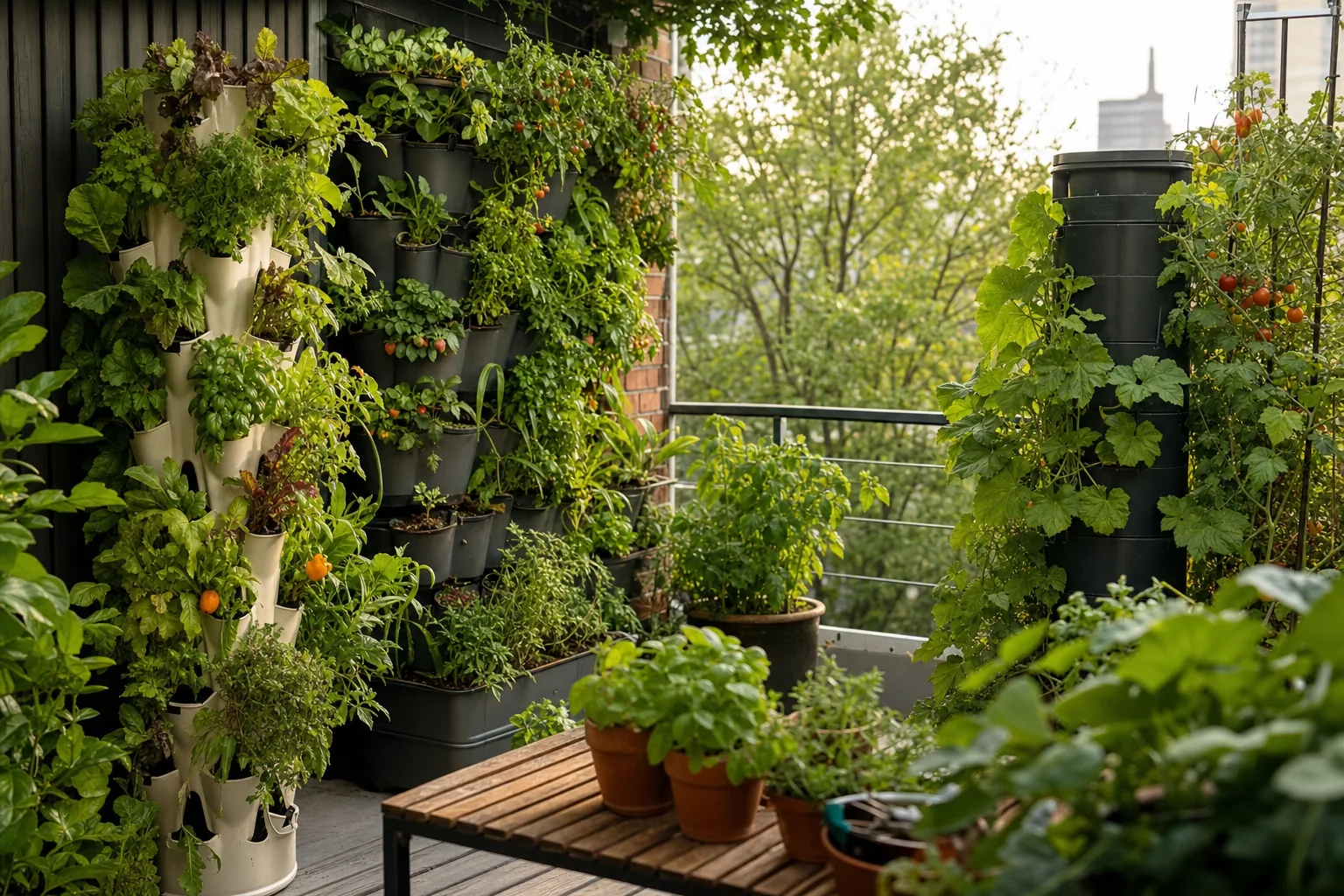
We’ve grown food on a 6x8 balcony for three seasons now, which is just long enough to get humbled by wind, dry pockets, aphids, and one overly ambitious cherry tomato that tried to become a tree. If you’re looking for the best vertical garden system, I’d start with this: the one that holds enough soil, doesn’t tip over when a thunderstorm rolls through, and lets you water without turning every Tuesday into a plumbing project.
Our balcony is west-facing, Zone 6b, with a black metal railing that gets hot enough in July to make basil sulk. We’ve tried stackable planters, a composting tower, railing boxes, fabric pockets, grow bags with trellises, and a cheap shelf setup that looked great for about eleven days.
Some systems actually grew dinner. Some grew guilt.
The short version: if I were buying one serious vertical planter for food, I’d buy the Garden Tower 2 - 50-Plant Vertical Composting Planter. It’s the one I’d trust for a real small-space harvest, especially if you want herbs, greens, strawberries, and a few compact vegetables in one footprint. It’s not cheap. It’s not dainty. But it earns its keep.
What makes the best vertical garden system for a balcony?
A balcony garden is not a patio garden with prettier railings. It’s harsher.
Wind hits harder. Pots dry faster. You can’t drag a hose across the yard. You have weight limits to think about. And if a planter leaks muddy water onto your downstairs neighbor’s chair cushions, you’ll hear about it.
For us, the best vertical garden system had to do a few boring-but-crucial things:
- Hold enough soil that plants don’t bake by 2 p.m.
- Stay upright in wind without a circus of bungee cords.
- Be waterable with a 2-gallon can.
- Fit through a normal door.
- Grow food we actually eat.
- Not require replacement parts every season.
That last one matters. I’ve bought “cute” planters that cracked after one winter because I forgot to bring them into the basement. My fault? Partly. But garden gear should survive a lazy gardener once in a while.
If you’re still planning your layout, our broader vertical gardening guide is where I’d start before buying anything tall, heavy, or hard to move. A vertical planter is only useful if it fits the light, wind, and watering rhythm you actually have.
Our pick: the Garden Tower 2 is the best vertical garden system if you want food, not decoration
The Garden Tower 2 - 50-Plant Vertical Composting Planter is the one that made me stop treating vertical planters like a novelty.
It’s a 50-plant vertical composting planter, and that composting bit is the reason it feels different from ordinary stacked pots. Instead of just packing soil into a tower and hoping everything behaves, you’re building a little contained growing system. Kitchen scraps go into the composting section, the plants grow around it, and the whole thing becomes more useful as the season goes on.
Does that mean you can dump in a week’s worth of watermelon rinds and expect magic? No. Don’t do that. We learned quickly that smaller scraps break down better — chopped banana peels, coffee grounds, wilted lettuce, crushed eggshells. Big chunks just sit there and make you feel watched.
What grew well in it
The best yields for us came from:
- Basil
- Parsley
- Cilantro in spring and fall
- Looseleaf lettuce
- Chard
- Strawberries
- Nasturtiums
- Dwarf marigolds
- Small peppers
- Bush beans, if planted on the sunnier side
I would not cram full-size tomatoes into every pocket and call it a plan. One compact tomato? Maybe. But tomatoes are greedy. They want root space, regular water, and attention. The Garden Tower can handle a lot, but it’s not a loophole in plant biology.
Where it shines is in mixed planting. Herbs on one side, greens tucked into cooler pockets, flowers to bring in pollinators, strawberries hanging around the edges like they own the place. By mid-June, ours looked messy in the best way.
What I didn’t like
It’s a commitment.
Once it’s filled, you are not casually moving it three feet to the left because the light changed. Pick the spot carefully. Check where the water drains. Check what’s under it. Check the balcony weight situation if you’re not on a ground-level patio.
And yes, see current price before you fall in love with it: Garden Tower 2 - 50-Plant Vertical Composting Planter. It costs more than the little stackable planters. No pretending otherwise.
But if you want the best vertical garden system for a patio or balcony that can behave like a tiny kitchen garden, this is my pick.
The GreenStalk Original 5-Tier is the one I’d buy for renters
The GreenStalk Original 5-Tier Vertical Planter is the stackable planter I’d recommend to someone who wants serious growing space but doesn’t want the composting setup of the Garden Tower 2.
It’s especially good for renters because it breaks down into tiers. That sounds minor until you’ve moved apartments in August with soil under your fingernails and a pepper plant riding shotgun in the car.
We used a 5-tier stack for strawberries and herbs, then swapped half of it to greens the next spring. Strawberries looked adorable in it. Actually useful, too. The runners got annoying, but that’s strawberries being strawberries.
Where GreenStalk did well
The big advantage is usable growing volume compared with flimsy stackers. You can plant a surprising amount without everything feeling like it’s sharing one coffee mug of soil.
Good fits:
- Strawberries
- Lettuce
- Spinach
- Basil
- Thyme
- Parsley
- Calendula
- Small greens
- Compact flowers for pollinators
We had better luck with leafy crops than fruiting crops. Peppers grew, but not as happily as they did in individual 5-gallon grow bags. That’s been true in most vertical systems for us. Fruiting plants are hungrier and fussier.
The downside
The outside pockets can dry faster than you think, especially on a windy balcony. In July, I checked ours morning and evening during hot spells. Not always watering twice — just checking. Stick a finger in the soil. Fancy moisture meters are fine, but your finger is free and harder to misplace.
Also, stackable doesn’t mean weightless. Once filled, it’s heavy and awkward. Not Garden Tower heavy, but still a “why did I do this alone?” object.
See current price here: GreenStalk Original 5-Tier Vertical Planter.
If the Garden Tower 2 is the full homestead brain choice, GreenStalk is the practical renter choice. Less composting romance. More grab-and-grow.
Mr. Stacky is fine for herbs and strawberries — but stake it if your balcony gets wind
The Mr. Stacky 5-Tier Vertical Strawberry and Herb Planter was our “let’s not spend much and see what happens” planter.
And honestly? It did better than I expected for basil, mint, parsley, and a few strawberries. It’s not the same league as the Garden Tower 2 or GreenStalk, but it has a place.
Small patios. Apartment balconies. A sunny corner near the kitchen door. That’s where Mr. Stacky makes sense.
What worked
Herbs worked.
Not woody monsters. Not rosemary that wants to become a shrub. But soft herbs like basil, cilantro, parsley, and dill were happy enough if we kept up with watering. Strawberries grew too, though they needed more attention during heat waves.
It’s a nice planter if you’re trying to stop buying $3 plastic clamshells of herbs that rot in the fridge after one recipe. Plant parsley once and snip it all summer. That’s the sort of small win that adds up.
What didn’t work
Wind.
When the soil dried out, the planter got light. Light stacked planters and balcony gusts are not friends. We didn’t have ours fully topple, but it leaned hard enough one afternoon that I moved it behind a heavier ceramic pot like a coward. A practical coward.
If you buy one, put it in a sheltered spot or secure it. Don’t set it at the exposed corner of a balcony and then act surprised when August weather tries to launch it.
See current price here: Mr. Stacky 5-Tier Vertical Strawberry and Herb Planter.
This is not my pick for the best vertical garden system overall. It is a decent budget herb-and-strawberry tower if you understand its limits.
Fabric wall pockets: pretty for two weeks, thirsty forever
I wanted to love fabric wall pockets. Truly.
They look fantastic in photos. A wall of lettuces, trailing herbs, flowers spilling over the sides. Very “tiny urban farm,” very charming. Then July shows up and the whole thing drinks like a horse.
Our fabric pocket planter hung on a sun-warmed wall, and the top pockets dried first, the edge pockets dried second, and the middle pockets stayed oddly damp. That uneven moisture made planting tricky. Basil hated the dry top. Lettuce bolted. Mint did fine because mint would grow in an old boot and ask for more territory.
Where fabric pockets make sense
Use them for shallow-rooted, forgiving plants:
- Thyme
- Oregano
- Mint, if you’re not afraid of it
- Sedum
- Nasturtiums
- Small flowers
- Maybe lettuce in spring
They’re also useful if you’re trying to green up a bare fence or patio wall and don’t care about maximum food production.
Why I wouldn’t choose them for a main food garden
They dry too fast. They can stain the surface behind them. And if drainage is poor, the lower pockets can get swampy while the top is crispy. That combination makes a gardener mutter.
We still use one on a fence panel, but it’s mostly flowers and tough herbs now. I stopped asking it to grow salad in August. That was unfair to both of us.
If you’re building out a whole small-space setup, pair fabric pockets with sturdier planters from the vertical gardening hub, not as the backbone of your harvest.
Railing planters with a trellis are boring, which is why they work
Railing planters don’t feel like a “system.” They feel like something your neighbor has with half-dead petunias in it.
But a deep railing box plus a trellis can grow a surprising amount of food, and it’s one of the most wind-safe vertical setups we’ve used. The planter sits low. The trellis gives plants somewhere to climb. The whole thing doesn’t act like a sail unless you get silly with it.
We used a long railing planter with a simple vertical support for peas in spring, cucumbers in summer, and sugar snap peas again in fall. Was it glamorous? No. Did we eat snap peas while standing barefoot on the balcony? Yes.
Best crops for this setup
- Sugar snap peas
- Pole beans
- Cucumbers, if you choose compact types
- Nasturtiums
- Malabar spinach
- Small vining flowers
- Lettuce in the front edge while vines climb behind
The trick is to use the front-to-back space. Plant climbers at the rear. Tuck greens or herbs toward the front. Keep the trellis tied to something solid, not just stabbed into loose potting mix.
The annoying part
Railing planters can be shallow. Shallow soil dries quickly and limits root growth. Look for the deepest option your railing can safely hold, and don’t overload it with huge fruiting plants.
Also, drainage matters. A box dripping brown water onto a downstairs balcony is a fast way to become “that gardener.” We used saucers where possible and watered slowly. Not perfect. Better than a mud waterfall.
Grow bags plus a vertical trellis: best for tomatoes, cucumbers, and beans
If you want summer crops, don’t force everything into pockets.
Tomatoes, cucumbers, peppers, and beans often do better in grow bags with a proper trellis than in a stacked tower. It’s still vertical gardening. It just starts with root space instead of height.
Our best balcony cucumber year came from a 10-gallon grow bag with a trellis tied to the railing. Not elegant. The vines grabbed the netting, the flowers brought bees, and we picked cucumbers before work like smug little farmers.
Then 2024 happened and aphids found the nasturtiums, marched over to the cucumbers, and turned the whole corner into a sticky mess. We sprayed with water, pruned the worst bits, brought in more flowers, and eventually got it under control. Mostly. I still get twitchy when I see curled leaves.
What this setup does well
Grow bags plus trellis are great for:
- Cherry tomatoes
- Bush tomatoes with support
- Cucumbers
- Pole beans
- Peas
- Small melons if you’re ambitious and slightly reckless
- Peppers, though they may only need stakes
The advantage is root space. Plants with fruit need water and nutrients, and a bigger soil volume makes your life easier. A vertical tower full of tiny pockets can grow herbs beautifully, but a tomato wants more room at the table.
What can go wrong
The trellis must be anchored. Not “pushed into the soil and wished upon.” Anchored.
Wind turns leafy plants into sails. We use soft ties, railing clips, and sometimes plain old twine. Ugly twine. Reliable twine. The kind you cut off in October and swear you’ll do neater next year.
Grow bags also dry faster than plastic pots because the sides breathe. That’s useful for roots but annoying in hot weather. Mulch the top with shredded leaves or straw if you can. Even a thin layer helps.
A tiered shelf garden works — until the upper plants shade the lower ones
We tried a metal shelf on the balcony because I had a vision. Seedlings on top. Herbs in the middle. Lettuce below. A tidy little edible wall.
For about two weeks, it looked terrific.
Then the basil got big, the top shelf blocked the lower shelf, and the bottom lettuce stretched like it was auditioning for modern dance. The shelf also rattled in wind until we wedged it into a corner and weighed the bottom with pots.
Where shelves are useful
A shelf system is still handy for:
- Seedlings
- Small herb pots
- Succession lettuce trays
- Microgreens
- Hardening off transplants
- Keeping plants away from rabbits on a patio
It’s flexible. You can swap pots around, pull a sick plant, move the whole thing if it’s light enough. For renters, that flexibility is gold.
Why it’s not my main recommendation
Shelves create shade. That’s the problem nobody mentions when they show you a perfect staged patio garden. Plants stacked above other plants block light unless the shelves are spaced well and the sun angle cooperates.
On our west-facing balcony, the top shelf cooked and the bottom shelf sulked. Morning-sun balconies may behave differently. Take this with a grain of salt. Light is weird once buildings, railings, and overhangs get involved.
If you use shelves, put sun-hungry plants high and shade-tolerant plants low. Lettuce below basil can work in spring. Peppers below tomatoes? Not so much.
A freestanding arch or cattle-panel setup is overkill on some balconies, perfect on patios
This is the one I wouldn’t use on a tiny upstairs balcony unless you can anchor it safely. On a patio, though? Wonderful.
A cattle-panel arch, obelisk, or freestanding trellis can turn two containers into a wall of beans, peas, cucumbers, or flowering vines. You get vertical yield without buying a tower. The plants still grow from large containers at the base, which solves the root-space problem.
We’ve done this in the kitchen garden with cattle panels and T-posts, and a smaller patio version with two heavy planters. The big lesson: the base matters more than the trellis. A gorgeous arch in two undersized pots is just a future weather event.
Best uses
- Pole beans
- Snap peas
- Cucumbers
- Malabar spinach
- Climbing nasturtiums
- Small squash only if the support is strong
- Flowers mixed with food crops
There’s something deeply satisfying about walking past a vertical wall of beans and picking dinner from eye level. No bending. No hunting under prickly leaves. Just beans, right there.
The catch
This setup needs space at the base. It also needs anchoring. If you’re on a balcony, ask yourself what happens if a storm hits while you’re at work. If the honest answer is “my trellis becomes a neighborhood problem,” choose a lower planter.
Patios are more forgiving. Ground-level spaces let you use heavier containers, sandbags, or attachment points. Balconies demand more caution.
So, which one would I actually buy?
If I could only keep one, I’d keep the Garden Tower 2 - 50-Plant Vertical Composting Planter.
That’s my pick for the best vertical garden system because it gives you the most complete small-space growing setup: lots of planting spots, composting built into the system, and enough presence that it feels like a real garden instead of a stack of pots you’re babysitting.
I’d choose the GreenStalk Original 5-Tier Vertical Planter if I were renting, moving soon, or didn’t want to deal with composting in the planter.
I’d choose the Mr. Stacky 5-Tier Vertical Strawberry and Herb Planter if the budget was tight and my goal was herbs, strawberries, and a small footprint — with wind protection.
For tomatoes and cucumbers, I’d still use grow bags with a trellis. No shame in that. The best vertical garden is not always the tallest tower. Sometimes it’s a big bag of soil and a sturdy support.
A few planting combinations that didn’t make us regret everything
Here are the combos I’d repeat.
Garden Tower 2:
- Basil, parsley, lettuce, chard, strawberries, nasturtiums
- Spring greens, cilantro, calendula, thyme
- Strawberries on the outer pockets with herbs tucked between
GreenStalk:
- Strawberries and thyme
- Lettuce, spinach, parsley, calendula
- Basil-heavy summer herb tower
Mr. Stacky:
- Basil, parsley, cilantro, dill
- Strawberries with a few small flowers
- Mint only if you’re willing to let mint be mint
Railing planter with trellis:
- Snap peas plus lettuce
- Pole beans plus nasturtiums
- Compact cucumbers plus basil nearby, not crowded into the same root space
Grow bag with trellis:
- Cherry tomato plus basil in a separate small pot nearby
- Cucumber plus nasturtium
- Pole beans with calendula at the base
One mistake we made early was planting every pocket like empty space was a moral failing. Don’t. Plants grow. Shocking, I know.
Leave airflow. Give basil room. Don’t tuck lettuce behind a cucumber vine and expect it to be grateful.
Watering is where most vertical gardens fail
People blame the planter. Sometimes it’s the watering.
Vertical systems dry unevenly. Top sections get more sun and wind. Outer pockets dry before inner soil. Fruiting crops can go from fine to dramatic in one hot afternoon.
Our routine in summer was simple: check in the morning, water slowly, check again during heat waves. Not always more water. Just attention.
Slow watering matters. If you dump a full can into a dry tower, water can run through channels and leave dry pockets behind. I water once lightly, wait a few minutes, then water again. Same trick as rehydrating a peat-heavy potting mix.
Use good potting mix, not garden soil. Please. We made that mistake years ago in a raised bed with contractor topsoil and it compacted into something close to sidewalk. In containers, bad soil gets worse faster.
For vertical planters, I like a fluffy potting mix with compost blended in. If it shrinks badly after watering, top it up. If it crusts over, loosen the surface with your fingers. Nothing fancy.
More small-space watering notes are in our vertical gardening guide, especially if you’re trying to garden without an outdoor spigot.
What I’d skip
I’d skip ultra-thin wall pockets as a main food source.
I’d skip mystery-brand stackers that feel brittle before they even have soil in them.
I’d skip tall lightweight towers on exposed balconies unless you can anchor them safely.
And I’d skip any setup that makes watering miserable. If you have to drag plants into the bathtub twice a week, you will stop gardening by July. Maybe June.
Ask me how I know.
The planter has to fit your patience level. Mine is decent in April, average in June, and deeply compromised by August humidity. A good vertical garden system should still function when you’re tired, busy, and slightly annoyed.