7 Best Plastic Strawberry Containers 2026 (Tested for Yield)
Growing strawberries in containers? We tested 7 plastic and grow-bag setups for drainage, root depth, and 2026 harvest yield — here is the winner under $30.
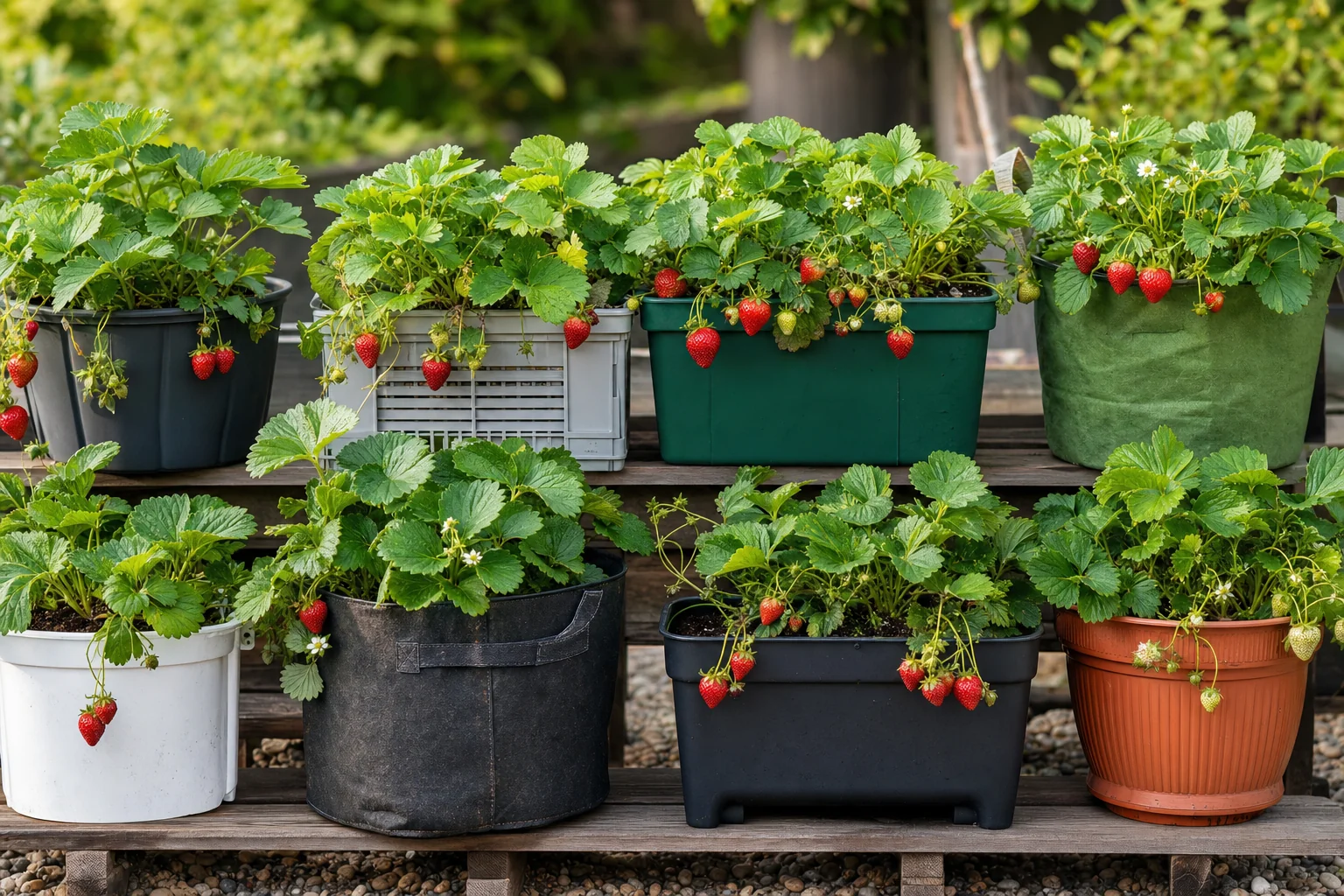
We grew this round of container strawberries on the south side of our shed in Zone 6b, where the afternoon sun bakes black plastic like a skillet by late June. The whole point was simple: find a plastic strawberry container that drains, holds enough root space, doesn’t turn watering into a part-time job, and actually gives us berries worth walking outside for. We tested seven setups — four store-bought planters or grow bags, plus three cheap plastic options we already had kicking around — and the one I’d buy again first is the VIVOSUN 5-gallon grow bag setup. Not flashy. Not cute. But the plants rooted hard, stayed evenly moist, and gave us the steadiest harvest without babying.
A quick bit of context before anyone yells at me from the comments: strawberries are fussy in containers. They aren’t difficult, exactly, but they punish lazy watering. A shallow plastic pot will look fine in April and then sulk like a teenager in July. A tower planter can look amazing for three weeks, then the top dries out while the bottom sits wet. We’ve done both. More than once.
For this test, I used mostly everbearing strawberries because I wanted to see how the containers handled a longer season, not just one big June flush. We planted in spring 2025, overwintered what survived, and checked production again going into the 2026 guide update. I didn’t run a university trial. I’m not pretending otherwise. But I did grow them side by side, in the same sun, with the same watering routine, and the same compost-heavy potting mix. That tells you plenty.
If you’re just getting started with pots, our broader container gardening guide is a good place to sort out soil, watering, and what not to cram into a five-gallon bucket.
The plastic strawberry container setup that won
The winner was the VIVOSUN 5-Gallon Grow Bags (10-Pack).
Here’s the link I’d use to check current pricing: VIVOSUN 5-Gallon Grow Bags (10-Pack)
Yes, grow bags aren’t hard plastic. But they belong in this test because plenty of folks shopping for a plastic strawberry container are really looking for “something cheap, light, non-clay, and not a raised bed.” Fabric grow bags fit that lane. And for strawberries, they beat most rigid plastic pots we tried.
The VIVOSUN bags gave each strawberry crown enough root room without turning the whole thing into a wet swamp. Five gallons is a sweet size for container strawberries if you plant one to three crowns per bag. I liked two plants per bag best. Three worked, but they needed more feeding and the berries ran smaller when I got lazy with compost tea.
What I liked:
- Good root depth for strawberries
- Much more forgiving than shallow plastic bowls
- Easy to move before filling
- Drained well after thunderstorms
- Cheap enough to scale up if the current price is decent
What annoyed me:
- Fabric dries faster in hot wind
- They don’t look as tidy as a plastic wall planter
- You need a saucer, tray, gravel strip, or mulch under them if they’re sitting on a patio
- Handles are useful, but I still don’t move them once they’re wet and full
If you’re trying to grow the most berries for the least fuss, this is the one I’d start with. Check the current price before you decide, because Amazon pricing likes to act drunk.
How we tested each plastic strawberry container
I planted the containers along the same 22-foot run by the shed, where they got morning sun around 8:30 and full sun until roughly 4:00 in June. The shed wall reflects heat, which is both useful and a problem. Strawberries wake up early there. They also dry out fast.
The mix was our usual container blend:
- 2 parts peat-free potting mix when I had it, regular potting mix when I didn’t
- 1 part finished compost from our chicken-run pile
- A few handfuls of perlite if the bagged mix felt heavy
- Espoma Berry-tone at planting, used lightly
- Straw mulch tucked around the crowns after the soil settled
We watered with a hose wand most mornings during dry spells. No drip line for this test, partly because I wanted to see which containers were annoying without automation. If you’re already running 1/4-inch drip or a little 1/2-inch mainline along a patio, you’ll have an easier time than we did.
I judged each setup on four things:
- Drainage after heavy rain
- Root depth and crown health
- Watering frequency during hot weather
- Harvest consistency, not just the first flush
I also paid attention to how much I hated dealing with it. That matters. If a planter makes you mutter every time you water, you’ll stop checking it by August. Ask me how I know.
1. VIVOSUN 5-gallon grow bags: the one I’d buy again
The VIVOSUN bags were boring in the best possible way.
I planted two strawberry crowns per 5-gallon bag, offset slightly instead of right on top of each other. That gave each plant room to throw runners and fill the surface without turning into a tangled mat. The roots had enough depth to stay cooler than they did in shallow plastic planters.
They drained fast after storms but didn’t dry out quite as violently as the smaller hanging setup. In July heat, I watered them most mornings. If we had two cloudy days, I skipped a day. Pretty normal.
The yield was the most consistent of the group. Not always the earliest berries, not the prettiest display, but the most dependable bowls over the season. The plants looked better going into fall, too. That mattered for the 2026 update because overwintered strawberries usually tell the truth. Weak roots don’t fake it in February.
Buy/check current price here: VIVOSUN 5-Gallon Grow Bags (10-Pack)
Best use: a practical strawberry patch on a driveway edge, patio, deck, or beside a raised bed.
Skip it if: you want something decorative for a front porch. These look like grow bags. Because they are grow bags.
2. Root Pouch 5-gallon breathable fabric pots: sturdy, but not my first pick for strawberries
The Root Pouch 5 Gallon Breathable Fabric Pots did well, too. You can check them here: Root Pouch 5 Gallon Breathable Fabric Pots
Compared with the VIVOSUN bags, the Root Pouch felt a little more substantial in hand. I liked the fabric. It held its shape better when I was filling it, which sounds minor until you’ve tried dumping potting mix into a floppy bag while the wind is blowing compost into your socks.
The strawberries rooted nicely. Drainage was good. Crown rot wasn’t an issue, even after we got a nasty stretch of rain in May.
The drawback? Cost-to-berry ratio. Since I don’t have a current price from the listing, I won’t pretend. Use the link and see current price. But if the Root Pouch bags are noticeably higher than the VIVOSUN 10-pack, I’d only choose them if you value the heavier feel and neater shape.
Specific advantage: better structure and a more planted-in-place feel.
Specific disadvantage: if you’re trying to set up a whole strawberry row cheaply, the price can be harder to justify compared with basic 5-gallon grow bags.
I’d use Root Pouch for a mixed container planting where looks matter a little more — maybe strawberries with thyme spilling around the edge. For pure berry production, I’d still buy the VIVOSUN first.
3. Weperk Strawberry Planter Pot with 30 Holes: clever, but thirsty
The Weperk Strawberry Planter Pot with 30 Holes (Pack of 2) is the one people notice. Here’s the affiliate link to check it: Weperk Strawberry Planter Pot with 30 Holes (Pack of 2)
I get the appeal. A vertical strawberry planter looks efficient. Thirty holes sounds like a backyard berry machine. And if you’re working with a tiny patio, the idea of going upward instead of outward makes sense.
But here’s the problem: strawberries are not lettuce plugs. They want root space, consistent moisture, and crowns that don’t stay soggy. A multi-hole plastic strawberry container asks you to balance all three inside one shared column of soil.
We planted fewer than the maximum holes because I’ve made that mistake before. Year one with an older tower planter, I stuffed every opening like I was loading a muffin tin. Looked amazing for about 18 days. Then the top plants dried out, the middle plants got shaded, and the lower plants stayed damp. Disaster, but photogenic.
With the Weperk-style 30-hole setup, I’d plant lightly. Leave empty pockets. Seriously. You’ll get better plants.
Specific advantage: it saves footprint space and can look full fast if you’re patient with planting density.
Specific disadvantage: watering evenly is fiddly. The top dries first, and the side pockets don’t all behave the same.
Would I use it again? Yes, but not as my main crop container. I’d use it for extra runners or a small patio display, not for my primary berry harvest.
A plastic strawberry container can fail fast if it’s too shallow
This is where most cheap strawberry planters get you.
A six-inch-deep plastic bowl looks fine at the garden center. It even looks fine when you plant it. But strawberries in shallow plastic heat up fast, dry out fast, and run out of nutrients fast. Then you’re watering twice a day in July and wondering why the leaves are crispy around the edges.
We tested a basic plastic bowl planter because I had one in the garage from a failed pansy situation. It had drainage holes. It wasn’t tiny. I thought it might work with three strawberry plants.
Nope.
The plants survived, but they never pushed hard. Berries were smaller, and the soil surface went from wet to crusty in a single hot afternoon. By late August, one crown had lifted enough that I had to re-seat it with compost. That’s not the container’s fault exactly. It was the wrong tool.
If you use a shallow plastic strawberry container, keep it to one plant, mulch it, and don’t expect miracles. Better yet, use it for herbs.
For more detail on matching crop size to pot size, I’d point you back to our container gardening basics. Pot depth is one of those boring things that saves you months of aggravation.
4. Umbra Trigg Hanging Wall Planter: pretty, but I wouldn’t crop strawberries in it
The Umbra Trigg Hanging Wall Planter (Strawberry Tower) is the most decorative option in this group. Check current listings here: Umbra Trigg Hanging Wall Planter
This is the one I wanted to love near the back door. It makes sense visually. Strawberries hanging on a wall? Cute. Easy to pick. Less slug pressure. Good idea.
But as a serious strawberry planter, it’s limited.
The big advantage is presentation. If you want a few plants where you can grab berries while making coffee, a wall planter can be fun. It also keeps fruit off the ground, which helps with rot and pill bugs.
The disadvantage is root volume. Hanging and wall-mounted planters usually don’t offer the same forgiving soil mass as a 5-gallon grow bag or deep pot. That means watering becomes a chore during hot stretches. Miss one day during a dry wind and the plants complain immediately.
I’d use the Umbra Trigg for alpine strawberries or a small handful of runners you want to keep tidy. I would not use it as my main plastic strawberry container if yield is the goal.
And mount it where you’ll actually water it. Not “I’ll remember.” You won’t. Put it near the hose or the door you use every day.
5. DIY 5-gallon plastic bucket: cheap and useful, with one ugly catch
We also tested a plain 5-gallon plastic bucket with drilled drainage holes. This is the homestead classic. Everybody has buckets. Some are food-grade, some held drywall compound in a previous life and should stay far away from your food garden.
For strawberries, a bucket works better than it looks. Drill plenty of drainage holes in the bottom — I used a 3/8-inch bit and made more holes than felt reasonable. Then I added four small side holes about an inch above the bottom because our summer storms can dump rain hard.
One bucket with two strawberry plants did pretty well. Not as good as the grow bags, but better than the shallow bowl and more predictable than the tower.
Specific advantage: deep root space and cheap if you already have clean buckets.
Specific disadvantage: plastic buckets can hold too much heat, especially dark ones. A black bucket against a wall in July is rough on roots.
White buckets were better. Tan buckets were fine. Black buckets needed afternoon shade or a mulch sleeve around the outside. I wrapped one in burlap with clothespins because I was too cheap to move it. Looked ridiculous. Worked okay.
Would I recommend buckets? Yes, if free is the deciding factor. But if you’re buying containers from scratch, I’d still rather use grow bags.
6. Black nursery pot: better than expected, but tipsy
You know the big black nursery pots shrubs come in? We tested one of those, too. I think it was around 3 gallons, maybe a bit more. The label was long gone.
This was my surprise middle-of-the-pack container. The strawberry plants liked the root depth. Drainage was already decent because nursery pots usually have generous bottom holes. The pot warmed early in spring, which helped growth get moving.
But it got hot. Very hot.
By late June, the sunny side of the pot felt uncomfortable to touch in midafternoon. The plants didn’t die, but they wilted faster than the grow bag strawberries sitting two feet away. I ended up clustering it behind a pepper container so the pot itself got a little shade while the strawberry leaves still had sun.
Specific advantage: free or nearly free if you buy shrubs, and deep enough for strong roots.
Specific disadvantage: black plastic overheats and lightweight nursery pots tip when plants lean or runners pull.
If you use nursery pots, double-pot them. Slip the black nursery pot into a larger light-colored decorative pot with an air gap. That little buffer helps more than you’d think.
7. Plastic window box: good for runners, not the main harvest
The last setup was a plastic window box. Ours was the long, cheap kind with clip-on saucers that never clip quite right after year two. I’ve used these for lettuce, parsley, and failed cilantro. Strawberries seemed possible.
They were possible. Just not great.
The window box gave more horizontal room than the bowl planter, so runners had somewhere to go. It looked tidy along the deck rail. The berries were easy to spot and pick.
But root depth was the limiting factor again. The soil dried quickly from the sides and top, and the plants needed feeding sooner than the 5-gallon containers. If you grow June-bearing strawberries and replace plants often, you might get away with it. For everbearing plants you want to keep through winter, it’s not my favorite.
Specific advantage: easy picking and nice use of railing or narrow spaces.
Specific disadvantage: shallow soil volume means more watering and smaller plants over time.
I now use window boxes mostly as nursery beds for runners. Pin a few runners into the box in late summer, let them root, then transplant the strongest ones into bigger containers or garden beds. That system works.
The biggest mistake: planting too many crowns
Every vertical strawberry planter tempts you to overplant. Every product photo does it. Full holes, lush leaves, berries everywhere.
Real life is messier.
If a container says it can hold 30 plants, I’m not planting 30 strawberry crowns unless I’m treating it like a short-term display. For production, I’d rather have 10 healthy plants than 30 thirsty ones. Crowded strawberries give you smaller berries, more leaf disease, and a miserable watering routine.
Here’s what worked better for us:
- 5-gallon grow bag: 2 plants, 3 max
- 5-gallon bucket: 2 plants
- Deep nursery pot: 1–2 plants
- Window box: 3 plants in a long box, but feed often
- Tower or 30-hole planter: plant fewer pockets than advertised
Leave the crown at soil level. Not buried. Not perched above the mix like a little umbrella. The crown is where new growth comes from, and if it stays wet, the plant can rot. If it dries out, the plant stalls.
I’ve killed strawberries both ways. Equal opportunity negligence.
Soil mix mattered more than the plastic
A plastic strawberry container is only as good as the mix inside it. We had one year — 2021, I think — where I filled a few patio pots with cheap “topsoil” from a torn bag behind the shed. It compacted after three rains and turned into a brick with leaves sticking out. The strawberries sat there looking offended until I dumped the whole thing into a low spot by the compost bins.
Don’t use garden soil straight in containers. It compacts. It drains badly. It brings weed seeds. Sometimes ants.
For strawberries, I want a mix that holds moisture but doesn’t stay sour. Bagged potting mix plus compost is fine. Add perlite if it feels dense. If your compost is salty or unfinished, go easy. Strawberries are not corn. They don’t want to be shoved into hot compost and told to thrive.
Mulch helps. Straw is traditional for a reason, but shredded leaves worked for us too. Pine needles were fine in a thin layer. Don’t pack mulch against the crown.
Feeding? Light and steady. I used Berry-tone at planting and a mild liquid feed when the plants were actively flowering. If leaves were lush but berries were sparse, I backed off nitrogen. Too much leaf, not enough fruit — we’ve all grown that disappointment.
Drainage: where plastic containers either shine or betray you
Rigid plastic holds water differently than fabric. That’s not bad. It just means you need to check the holes before planting.
I’ve bought plastic planters where the “drainage holes” were little decorative dimples that needed punching out. One had exactly three tiny holes for a pot the size of a laundry basket. That’s how you get swamp roots.
Before planting any plastic strawberry container, I do this:
- Fill it with a few inches of water.
- Watch how fast it drains.
- Drill more holes if it sits there.
- Lift it after draining to see if water is trapped in a false bottom.
Annoying? A little. Cheaper than replacing dead plants.
For buckets and nursery pots, 3/8-inch holes have worked well for us. For window boxes, I like holes every 4 to 6 inches along the bottom, plus a couple near the corners. If the container sits flat on a patio, raise it slightly so holes don’t seal against the surface. Two scrap cedar strips work. So do pot feet. So do three flat stones if you’re not picky.
Our final ranking for 2026
If I were setting up container strawberries again from scratch, here’s how I’d rank the seven.
- VIVOSUN 5-Gallon Grow Bags — best yield-to-effort balance in our test. Check current price: VIVOSUN 5-Gallon Grow Bags
- Root Pouch 5 Gallon Fabric Pots — sturdy and very good, but I’d compare price first. See current price: Root Pouch 5 Gallon Breathable Fabric Pots
- DIY 5-gallon plastic bucket — ugly, cheap, productive enough if drilled well.
- Black nursery pot — useful if free, but watch heat.
- Weperk 30-hole strawberry planter — fun vertical option, but don’t overplant. Check current price: Weperk Strawberry Planter Pot with 30 Holes
- Plastic window box — decent for runners, mediocre for long-term harvest.
- Umbra Trigg Hanging Wall Planter — pretty and convenient, but too limited for serious yield. See current price: Umbra Trigg Hanging Wall Planter
That’s the honest order from our yard. If you live somewhere cooler and wetter, the rigid plastic options may behave better than they did here. If you’re in Texas or Arizona, I’d be even more careful with black plastic and shallow planters. Heat changes everything.
So, which plastic strawberry container should you buy?
Buy the VIVOSUN 5-gallon grow bags if you want berries, not just a cute planter.
They gave us the strongest mix of root space, drainage, and steady production. They’re easy to scale, easy to store, and forgiving enough for normal human watering habits. If the current listing is under your budget, that’s where I’d spend first: VIVOSUN 5-Gallon Grow Bags
If looks matter more, consider the Weperk or Umbra options, but lower your yield expectations. They’re patio planters, not mini berry farms. If you already have clean buckets, drill them and use them. No shame in bucket gardening. Half our best harvests over the years started in something that used to hold pickles.
One last thing: don’t buy strawberry plants and containers on the same rushed Saturday if you can help it. Set up the containers first. Wet the mix. Check drainage. Let it settle. Then plant. That one tiny delay saves a lot of crown-burying, replanting, and muttering.
And if you’re building a whole patio food garden around strawberries, tomatoes, herbs, and peppers, keep our container gardening section handy. Strawberries are just one piece of the puzzle.