Vego Garden vs Birdies: Which Metal Raised Bed Is Actually Worth It in 2026?
Side-by-side test of Vego Garden and Birdies raised beds on build quality, rust resistance, and long-term value. One clear winner for most backyard gardeners.
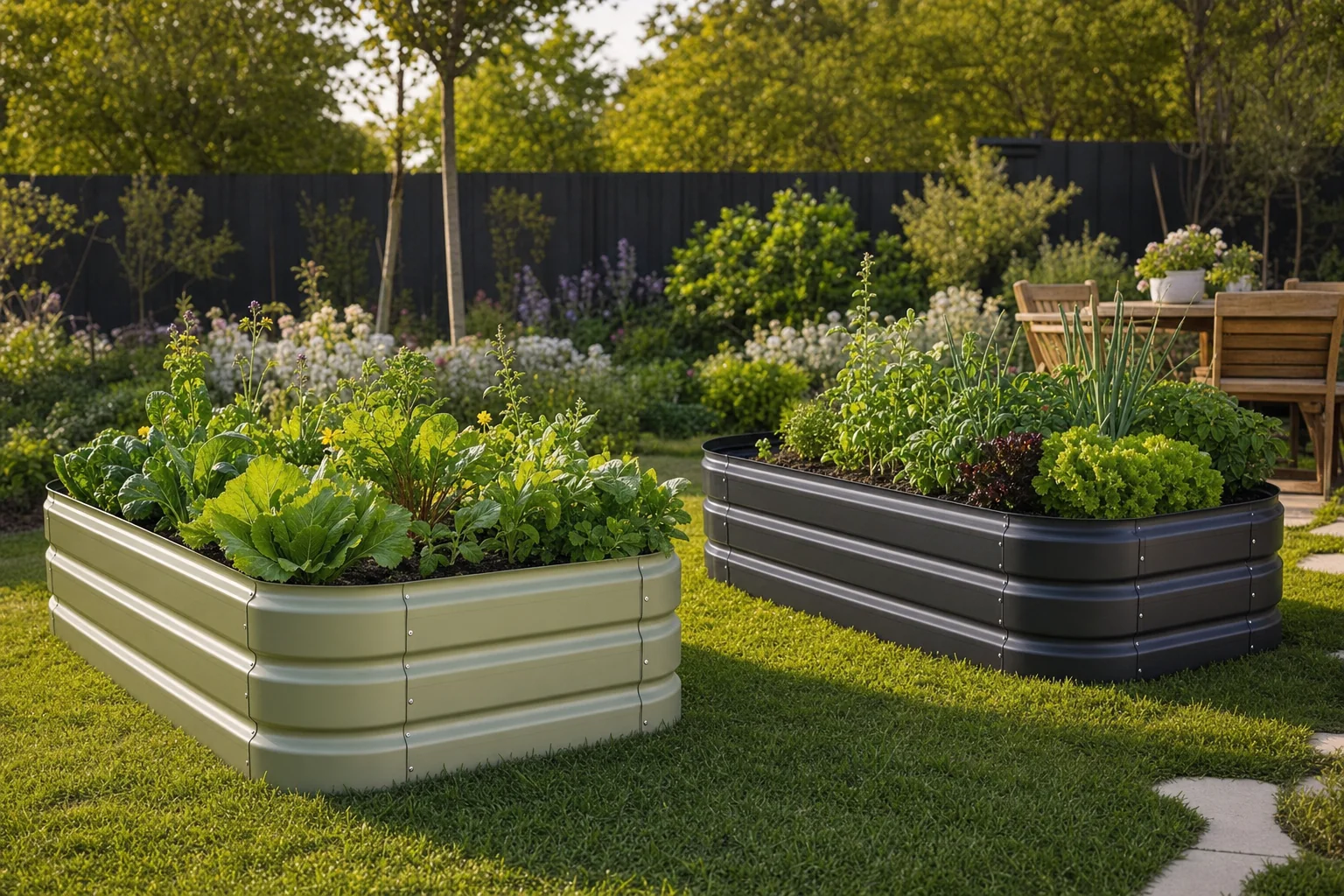
The vego garden vs birdies raised bed argument sounds fussy until you’re standing in the yard with 80 bolts, a stack of corrugated panels, and one Saturday afternoon you’d rather spend planting tomatoes. We’ve used both styles in our raised-bed garden setup, alongside cedar beds, cheap no-name metal beds, and one truly awful contractor-topsoil experiment that still annoys me when I think about it. Short version: both Vego Garden and Birdies are good metal raised beds. But for most backyard gardeners in 2026, I’d buy the Vego Garden tall modular bed first.
Vego Garden vs Birdies raised bed: my short answer
If I were adding two more beds behind our garage tomorrow, I’d buy the Vego Garden 17x32 Tall Modular Metal Raised Bed.
Here’s the link I’d use to check current price and options: Vego Garden 17x32 Tall Modular Metal Raised Bed
Birdies is not a bad bed. Not even close. The Birdies 8-in-1 Modular Galvanized Raised Bed is sturdy, proven, and honestly prettier than a lot of metal beds once it’s planted out with basil spilling over the edge. You can check it here: Birdies 8-in-1 Modular Galvanized Raised Bed
But if we’re talking about the bed I’d recommend to a neighbor who wants one clean purchase, flexible layout choices, decent height, and fewer regrets three years from now, Vego gets my vote.
Not by a mile. By enough.
I’d call it a 60/40 decision, not a landslide.
What we actually compared
We’re in Zone 6b, with freeze-thaw cycles that like to bully anything left outside. Our garden is 14 beds now — mostly vegetables, with one bed that has become a permanent holding pen for calendula, self-seeded dill, and whatever pepper plant I couldn’t bring myself to compost.
Metal beds get a real workout here. Spring rain. Summer heat. Drip irrigation rubbing against corners. Mulch sitting against the panels. Kids leaning on the sides while hunting cherry tomatoes. Me dragging a hose across the top edge even though I know better.
For this comparison, I looked at the stuff that matters after the honeymoon period:
- Assembly without inventing new swear words
- Panel stiffness once filled
- Edge safety
- Rust resistance in a wet garden
- How useful the modular shapes actually are
- Long-term value, not just “what’s cheapest today”
- Whether I’d buy it again with my own money
We’ve also tested cheaper metal beds from Amazon over the years. One arrived with panels that felt like a soda can. Another had edge trim that popped off every time the hose touched it. One started showing orange rust at scratched bolt holes before the second fall cleanup.
That’s the stuff I’m comparing against. Not a showroom photo.
If you’re still narrowing down bed styles in general — wood, metal, composite, fabric, all of it — I’d start with our broader guide to the best raised garden beds for 2026 before getting too deep into this Vego vs Birdies rabbit hole.
Build quality: Vego feels a little more polished, Birdies feels a little more old-school
Both beds are corrugated metal panel systems. You assemble the panels with bolts, cap the top edge, set the bed where you want it, and fill it.
Simple on paper.
A bit repetitive in real life.
The Vego Garden bed felt slightly more refined during assembly. The panels lined up cleanly, the finish looked consistent, and the whole kit had that “somebody has assembled this before and fixed the annoying parts” feeling. Not perfect. Still a metal raised bed kit. Still bolts. Still crouching on damp grass while your coffee gets cold.
But it was smoother.
The Birdies bed had a more utilitarian feel. That’s not an insult. Birdies has been around long enough that a lot of gardeners trust them for exactly that reason. It feels like farm-garden hardware, not patio decor pretending to be hardware.
The difference showed up most in the little things. Vego’s modular system felt easier to configure without second-guessing myself. Birdies was straightforward, but I found myself checking the layout more often before tightening everything down.
And — this matters — don’t fully tighten the bolts until the whole bed is shaped and sitting square.
Ask me how I know.
The first metal bed I ever assembled, I tightened each panel as I went. By the end, the final corner was off just enough that I had to loosen half the bed and redo it while mosquitoes treated my ankles like a buffet. Leave everything a little loose. Shape the bed. Then tighten.
The edge trim situation
Both beds use a top edging/capping piece to cover the metal edge. I care about this more than I used to.
When we first switched from cedar to metal, I figured the edge trim was mostly cosmetic. Then I watched one of our kids lean over a bed to grab a Sungold tomato and catch their forearm on a cheap metal edge from a bargain kit.
Not a disaster. Still annoying.
Vego’s edge treatment felt better to me. It stayed seated more reliably during setup, and once the bed was filled, it didn’t shift much. Birdies was fine, but a little more fiddly in my hands.
Your mileage may vary. Some of this depends on patience, temperature, and whether the trim has been sitting curled up in a box in a cold garage.
Warm trim behaves better. Cold trim is a brat.
Rust resistance: both are good, but scratches are still scratches
Here’s where people get weirdly emotional online. You’ll see folks talk about galvanized metal beds like they’re either immortal or doomed.
Reality is duller.
Both Vego and Birdies are built for outdoor garden use. Both are much better choices than the thin mystery-metal beds I’ve seen rust at the seams after one sloppy season. Both should handle normal backyard use well if you don’t gouge them up, leave harsh fertilizer sitting against bare scratches, or attack them with a metal shovel every April.
In our beds, the most vulnerable spots are always:
- Bolt holes
- Panel edges
- Places where a shovel or garden fork hits the side
- Bottom edges sitting in soggy mulch
- Scratched areas near the hose path
I haven’t seen the kind of ugly orange rust on the Vego or Birdies beds that I saw on cheap beds. That’s the big point.
But no metal bed gets a free pass. If you scratch through the coating, you’ve created a weak spot. Same as a wheelbarrow. Same as a painted gate.
The Vego finish has held up nicely in our use. Birdies has too. I don’t think rust resistance is the reason to choose one over the other unless you’re comparing a current finish option in person and strongly prefer one coating.
One thing I do now: I keep a narrow strip of wood or cardboard inside the bed when filling with rough compost or soil. Sounds fussy. It saves the lower inside panels from getting scraped by the shovel.
Do I do it every time? No.
Should I? Probably.
The real test: filling and pressure
An empty raised bed tells you almost nothing.
Fill it with wet soil and compost, then wait for three spring storms. That’s when weak beds start to bow.
This is also where bed height matters. A shallow metal bed is easier to fill and cheaper to set up, but a taller bed is nicer for carrots, potatoes, and anyone whose back complains louder than it did ten years ago.
We’ve filled metal beds a few different ways:
- Straight raised bed mix from a local landscape supplier
- A lasagna-style bottom layer with sticks, leaves, and half-finished compost
- Bagged compost mixed with native soil
- One terrible year of “screened topsoil” that compacted into something close to pottery clay
The screened topsoil year was our fault. We were trying to fill beds cheaply. The soil looked fine when it was dry. After two rains, it sealed over like a parking lot. Peppers sulked. Beans germinated unevenly. I spent the rest of the season poking holes with a broadfork and muttering.
Don’t judge a raised bed by a bad fill. A good bed with lousy soil is still a lousy garden.
Both Vego and Birdies handled fill pressure better than cheap beds. No surprise there. The corrugation helps. The modular shape matters too; long skinny configurations can show pressure more than compact ovals or rectangles.
This is one reason I like the Vego Garden bed for most people. The shape options are useful, but I’d still avoid getting too clever. A long bed looks great along a fence until it bows slightly in the middle and makes you stare at it every time you walk past.
Keep the shape sensible. Fill evenly. Water it in. Top off after settling.
Vego Garden vs Birdies raised bed for layout flexibility
This is where Vego pulled ahead for us.
I like modular beds because garden plans change. What looked perfect on graph paper in February feels ridiculous in May when you’re squeezing between beds with a harvest basket, a hose, and two tomato cages you forgot to put away.
The Vego Garden tall modular bed gives you a lot of flexibility for backyard layouts. That’s helpful if you’re building around:
- A fence line
- A narrow side yard
- Existing irrigation
- A greenhouse
- A kid path you didn’t know existed until they wore it into the grass
- Sun patches that shift more than you expected
Birdies’ 8-in-1 design is flexible too. That’s right in the name. And I like it. But Vego felt easier to fit into our existing garden plan, especially where bed height and shape both mattered.
If you’re starting from scratch, either one works. If you’re squeezing one more bed into an already crowded vegetable garden, Vego is the one I’d rather puzzle into place.
We have one spot between a raspberry row and a cattle panel trellis where four inches genuinely matters. That’s the kind of place where modular choices stop being a spec-sheet thing and become a real-life thing.
Assembly notes from someone who has assembled too many beds
Wear gloves.
Not because these beds are dangerous when assembled correctly. Because corrugated metal panels are awkward, and the corners will find the soft part of your hand if you get cocky.
I use cheap nitrile-coated work gloves from the hardware store. Nothing fancy. The $6–$9 kind near the checkout.
Also helpful:
- A cordless drill with the clutch set low
- A hand screwdriver for final snugging
- A rubber mallet
- A level, if your yard lies to you like ours does
- A tarp to keep hardware out of the grass
- A second person for the first 10 minutes
You can assemble these solo. I have. It’s just more annoying.
The biggest mistake is over-tightening. You’re not building a bridge. You’re holding panels together. If you crank down too hard, you can deform the panel around the bolt.
Snug is enough.
Another thing: assemble the bed close to where it will live. These beds are light when empty, but they’re floppy enough before filling that carrying them across the yard is a two-person comedy routine.
We tried moving one assembled metal bed about 60 feet. It worked, technically. It also looked like we were carrying a giant taco.
Would not recommend.
Looks: Vego is cleaner, Birdies has that market-garden charm
This is subjective, and I won’t pretend otherwise.
Vego beds look a little more finished to me. Cleaner lines. More backyard-garden friendly. If your raised beds sit near a patio, driveway, or front-yard edible garden, I think Vego blends in better.
Birdies has a classic market-garden look. I mean that as a compliment. It looks like it belongs next to a greenhouse, a row of broadforked beds, and someone who starts onions under lights in January because they “might as well.”
In a big productive garden, Birdies looks right.
In a small suburban yard where the beds are part of the view from the kitchen window, I prefer Vego.
Again, not a moral issue. Just taste.
The plants cover half the bed by July anyway. By August, nobody is admiring your panel finish. They’re trying to figure out why one zucchini plant has become a piece of outdoor furniture.
Long-term value: don’t just compare the sticker price
I’m careful with garden spending because the garden already has a way of turning $40 ideas into $300 weekends.
Raised beds are especially sneaky. The bed kit is only part of the cost. You still need soil, compost, mulch, maybe drip irrigation, maybe trellis posts, maybe hardware cloth if voles are a problem.
So when comparing Vego Garden vs Birdies raised bed pricing, I wouldn’t only look at which one is cheaper on the day you shop. Prices change. Sales come and go. Shipping can make a “deal” less exciting.
Check current pricing here:
Vego Garden 17x32 Tall Modular Metal Raised Bed — see current price
Birdies 8-in-1 Modular Galvanized Raised Bed — see current price
For long-term value, I look at three things:
- Will I still like the shape in five years?
- Will the bed hold up to normal garden abuse?
- Will I regret not buying the taller or more flexible option?
Vego wins that for me because the modularity feels more useful in a home garden. Birdies is strong value too, especially if you like the classic layout choices and don’t need as much flexibility.
But for most backyard gardeners, I’d rather spend once on the Vego and be done.
Where Birdies is better
Birdies deserves its own praise here.
The Birdies 8-in-1 bed feels like a product made for people who actually grow food, not just people staging a patio. It has a practical, no-nonsense feel. If you’re building several beds for a productive kitchen garden and you like simple repeatable layouts, Birdies makes sense.
Specific advantage: the 8-in-1 layout system is easy to understand once you’ve assembled one, and the bed has that sturdy, established-market-garden reputation.
Specific disadvantage: compared with Vego, I found it a bit less polished during setup, especially around edge trim and layout fussing. Not awful. Just not my favorite.
I’d choose Birdies if:
- You already have Birdies beds and want the garden to match
- You like the look better
- You’re building a more utilitarian food garden
- The current price is meaningfully better when you shop
- You don’t need Vego’s exact configuration options
Birdies is not the consolation prize. It’s the bed I’d recommend to the person who says, “I don’t care about perfect; I want tough and proven.”
Fair.
Where Vego is better
Vego feels more homeowner-friendly without being flimsy. That’s the sweet spot.
Specific advantage: the modular design and finished feel make it easier to recommend for mixed spaces — backyard gardens, side yards, visible veggie beds, and small homesteads where the garden has to work hard but still look decent.
Specific disadvantage: you may pay more depending on current sales and configuration, and all those modular options can make people overthink the layout. Been there. I once spent an entire rainy evening sketching bed shapes when the obvious rectangle would’ve been fine.
Vego is the one I’d choose if:
- You’re buying your first serious metal raised bed
- You care about appearance
- You want flexible shapes
- You’re working in a smaller yard
- You want a taller bed for easier planting and deeper soil
- You’d rather not replace a cheap bed in three seasons
The Vego Garden tall modular bed also pairs nicely with drip irrigation. We run 1/2-inch mainline with 1/4-inch drip lines in some beds and 3/8-inch tubing in others, depending on what parts were left in the bin. Not elegant. Works.
Metal beds warm quickly in spring, so drip plus mulch helps keep moisture steady once June heat hits. Without mulch, the top few inches dry faster than people expect.
We use shredded leaves when we have them, straw when we don’t, and chopped comfrey when I’m feeling smug.
A note on soil depth, because this is where people waste money
The bed is the visible purchase. The fill is the real investment.
A tall metal bed can swallow a shocking amount of soil. Before you buy, sketch the bed shape and estimate volume. Then add a little extra because soil settles. It always settles.
For tall beds, I’m fine using bulky organic material in the bottom third if it’s a vegetable bed and the material is already starting to break down. Small branches, old leaves, rough compost, dead sunflower stalks chopped up. Nothing treated. Nothing diseased. No walnut.
Then I want the top 10–12 inches to be good growing mix. Compost, mineral soil, and something that drains without turning fluffy and weird.
We’ve had the best luck with a local raised bed blend amended with our own compost. The worst luck was straight contractor topsoil. Second worst was cheap bagged “garden soil” that was mostly bark fines and disappointment.
If you’re spending money on a Vego or Birdies bed, don’t fill it with mystery dirt because the truck was available Tuesday.
That’s not thrift. That’s future labor.
Vego Garden vs Birdies raised bed: which one handles real backyard abuse better?
In normal use, both handle backyard abuse well.
By “normal,” I mean:
- Kids leaning on the sides
- Hoses dragging around corners
- Mulch piled against the base
- Wet leaves sitting over winter
- Occasional shovel bumps
- Freeze-thaw cycles
- Summer irrigation
By “not normal,” I mean:
- Hitting the panel with a mower
- Using the bed edge as a step
- Scraping the inside aggressively with a metal shovel
- Letting string trimmer line chew the coating
- Moving the bed after it’s filled
Don’t move it after it’s filled.
I know that sounds obvious. Someone will still try.
Between the two, I give Vego the edge for a typical backyard because the whole user experience is a bit smoother. Birdies may appeal more if you’re less concerned with polish and more interested in a workhorse bed.
If I were setting up six beds behind a barn? I’d price both hard and might go Birdies if the numbers worked.
If I were setting up two beds near the patio where my spouse will see them every morning? Vego. No debate.
For a wider buying breakdown, including other materials and budget picks, I’d cross-check our 2026 raised garden bed guide before ordering. Metal isn’t the only answer, even though I like it a lot.
Who should skip both?
A metal raised bed is not always the right buy.
Skip both Vego and Birdies if you’re renting and likely to move soon. Filled metal beds are not portable in any meaningful way. You can disassemble them later, sure, but the soil is the problem. Soil is always the problem.
Skip both if you have unlimited access to rot-resistant lumber and like building. A well-built cedar bed is still a beautiful thing. We have older cedar beds that have aged into that soft gray color I love. They just don’t last forever in wet spots.
Skip both if you want the absolute cheapest possible raised bed. You can make a growing area with mounded soil and mulch for less. It won’t look as tidy. It may grow vegetables just fine.
Skip both if your site floods. Raised beds help with drainage, but they are not boats. If water sits around the bed for days, fix drainage first.
And if you’re dealing with voles, put hardware cloth under the bed before filling. We use 1/2-inch galvanized hardware cloth. It’s annoying to cut. It’s less annoying than discovering a vole tunnel under your beet row.
My pick for 2026
For most backyard gardeners, I’d buy the Vego Garden 17x32 Tall Modular Metal Raised Bed.
It’s the better all-around choice in this Vego Garden vs Birdies raised bed comparison because it balances build quality, layout flexibility, appearance, and long-term usefulness. Birdies is still a strong bed. I’d happily grow in one. But if a friend texted me from the driveway asking which one to order before the weekend sale ended, I’d send the Vego link.
Here it is again: Vego Garden 17x32 Tall Modular Metal Raised Bed
And if you’re the kind of gardener who wants the classic workhorse option, Birdies is still worth a look: Birdies 8-in-1 Modular Galvanized Raised Bed
Just don’t cheap out on the fill.
I’d rather have a good bed with great soil than a great bed filled with compacted junk. Every time.