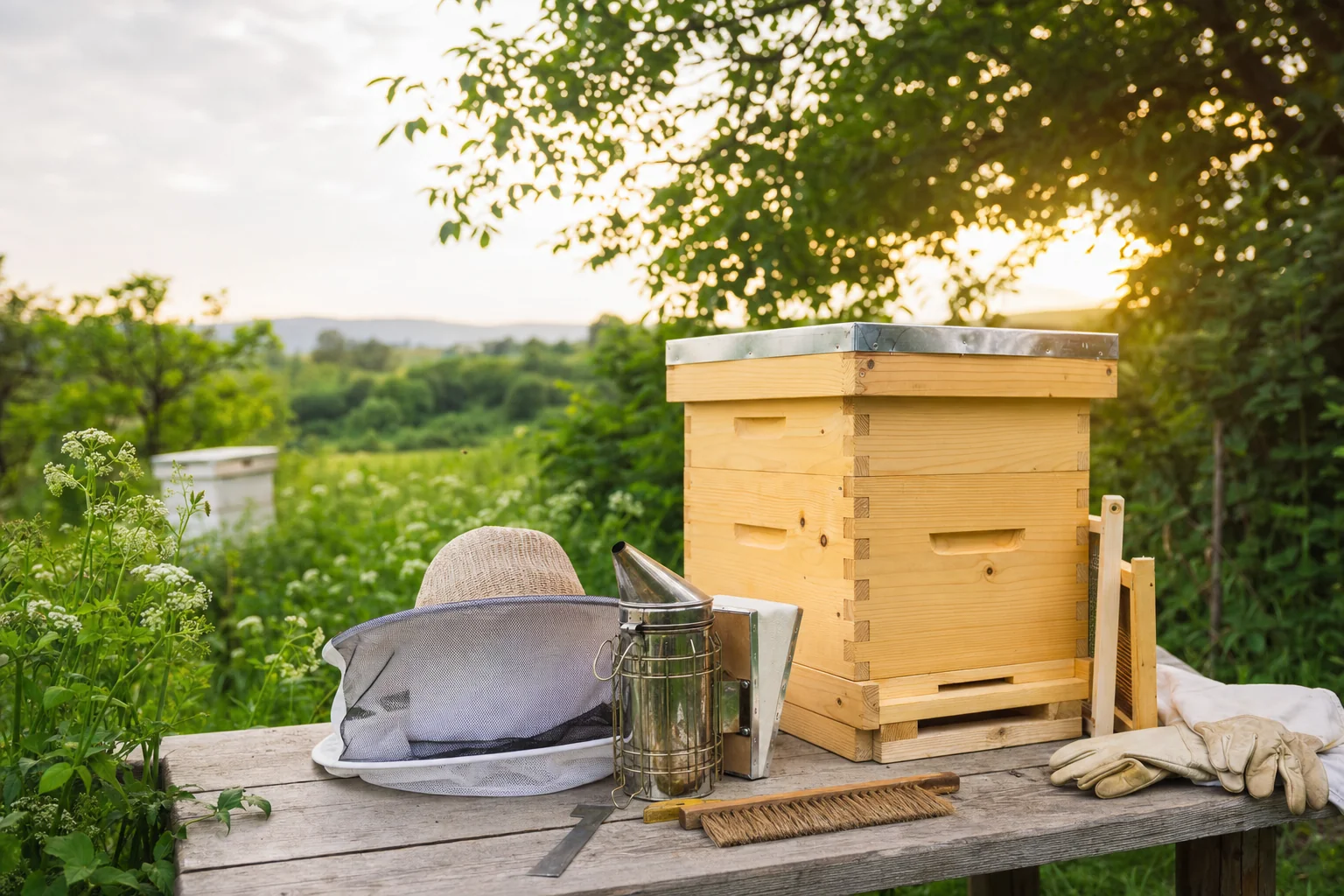
Not because shiny is evil. But first-year bees don’t care how pretty the hive looks on Instagram. They care about dry boxes, enough room, reasonable ventilation, good inspections, mite pressure, and whether you can get replacement parts on a random Tuesday in May when the colony suddenly needs another box. The winner for most beginners is boring in the best way.
It’s not the fanciest kit. That’s the point.
A 10-frame Langstroth hive is the Honda Civic of backyard beekeeping. Every bee club has someone who knows it. Every supplier stocks parts for it. If you crack a frame rest, need another deep, decide to run mediums, or realize your bees are drawing comb faster than expected during a black locust bloom, you’re not stuck trying to match oddball dimensions.
That matters more than beginners think. You need flexibility. Standard gear gives you that.
Mann Lake has the other boring advantage: people in bee clubs actually recognize the brand. That doesn’t mean every single listing is perfect, and Amazon bundles can change contents, so check the current box list before buying.
That’s Mann Lake. A hive kit is only one piece. The calendar matters more than the cardboard box on your porch. First-year beekeeping is mostly waiting, feeding when needed, inspecting calmly, learning what brood looks like, and trying not to accidentally roll the queen.
1.
Here’s the affiliate link again if you want to check the current contents and price: Mann Lake Complete Hive Starter Kit (10-Frame).
The advantage is simple: 10-frame Langstroth gear is everywhere. Frames, foundations, hive bodies, inner covers, telescoping covers, queen excluders, entrance reducers, feeders, bottom boards — you can find compatible parts from Mann Lake, Dadant, Betterbee, local suppliers, and half the old-timers in your county bee club who have a barn full of woodenware.
The disadvantage? A “complete starter kit” still doesn’t make you complete.
You’ll probably still need bees, a feeding plan, mite testing supplies, a local mentor, and maybe extra boxes sooner than you think. Some kits include protective gear; some listings change. Some include tools; some don’t. Don’t assume. Read the exact contents before buying.
That sounds fussy. It’s not. It’s beekeeping. Gear details matter in a hive.
Specific advantage
Standard 10-frame compatibility. If your colony needs more space fast, you can add standard equipment without rethinking the whole hive.
Specific disadvantage
You may still need to buy extras. Yes. No hesitation.
2. Local bee supplier 10-frame Langstroth starter kit — excellent if you can inspect it first
If you have a regional bee supply shop within driving distance, this can be nearly as good as the Mann Lake kit. Sometimes better. You can check the box joints. You can see whether the frames fit cleanly. You can ask whether the deep boxes are pine, cedar, cypress, or whatever they’re stocking that season. You can stand there like a picky raccoon and make sure the lid isn’t warped. The online box would’ve been cheaper. The local one was square, dry, and ready to paint.
The advantage of a local starter kit is advice. Real advice. The person behind the counter may know when packages arrive in your county, which nectar flows actually matter nearby, and whether your area is having a rough varroa year.
The disadvantage is inconsistency. Some local kits are thoughtfully assembled. Others are just whatever woodenware the shop had stacked in the back, bundled with a veil and a hive tool. You have to ask questions.
Good questions:
- Is this 10-frame Langstroth equipment?
- Are the frames and foundation included?
- Is it assembled or unassembled?
- What size brood boxes are included?
- Does this include a feeder?
- Do you recommend starting with one deep or two?
- What protective gear is actually in the bundle?
- Are bees included? Usually no, but ask anyway.
This is also where a bee club saves you money. Somebody will say, “Don’t buy that one, the bottom boards swell,” or “That shop’s frames are fine but skip their smoker.” Listen. Bee people argue about everything, but they are very good at spotting bad gear.
3. The harvesting idea is clever, and if you’re nervous about pulling honey frames, the appeal is obvious.
Here’s the link if you want to compare current listings: Flow Hive 2+ Complete Starter Kit.
Not because it’s junk. It isn’t.
The advantage of the Flow Hive 2+ is harvest convenience when everything is going right. A strong colony, capped honey in the Flow frames, warm enough conditions, good timing — that can be a neat setup.
The disadvantage is that beginners may focus on the harvest mechanism instead of the bees.
And the bees don’t care about the mechanism.
You still have to inspect brood. You still have to monitor mites. You still have to understand queen status, swarm pressure, comb building, robbing, dearth, and winter stores. You still need to open the hive. If anyone buys a Flow setup thinking they’ll never disturb the bees, they’re setting themselves up for trouble.
A Flow-style hive also costs more than a basic woodenware path. Just don’t spend premium-hive money and then skip the $10 alcohol wash jar, sugar roll supplies, or whatever mite-monitoring setup your local mentor recommends.
That’s backwards.
Specific advantage
The honey-harvest design can reduce the need to pull heavy honey frames during harvest, assuming the colony has filled and capped those frames properly.
Specific disadvantage
Higher cost and a bigger temptation to treat harvesting as the main feature of beekeeping. Maybe, as a second hive after a season or two.
4. Cheap no-name online starter bundles — tempting, but this is where beginners get burned
You know these kits. They have a dozen product photos, suspiciously perfect honeycomb, and a name that sounds like six companies got trapped in a blender.
Some are okay. Plenty are not.
The advantage is price. That’s why people click. Beekeeping already costs more than beginners expect — hive, suit, smoker, tools, bees, feed, mite treatments, extra boxes, jars, club dues if you’re smart. A cheap bundle looks like relief.
The disadvantage is quality control and missing pieces. Bees already glue everything with propolis.
Bee space is not a cute theory. It’s usually around 3/8 inch, and when equipment is sloppy, bees will fill the wrong gaps with burr comb or propolis. Then your inspections turn into surgery. First-year beekeepers do not need surgery.
Cheap kits also love to include lots of little accessories while skimping on the parts that matter.
No thanks. Used bee gear can carry problems. Don’t drag somebody else’s mess into your first colony.
Why Mann Lake wins the best beekeeping starter kit 2026 ranking
A starter kit should do one job: get you started without trapping you.
That’s why Mann Lake wins.
Not because it includes every possible thing. Not because it guarantees success. No kit can do that. Bees can starve two feet from honey stores in a weird cold snap. Queens fail. Packages abscond. Nucs arrive hot and crowded. Varroa mites don’t read the beginner handbook.
But the Mann Lake 10-frame path gives you the most forgiving foundation.
Standard equipment buys you time. And beginners need time.
Time to learn how a calm hive sounds. Time to spot eggs without holding the frame like you’re defusing a bomb. Time to understand that white wax on top bars during a nectar flow is exciting, but backfilled brood nests can mean swarm pressure. Time to learn the difference between “they’re busy” and “they’re queenless and cranky.”
The kit that supports that learning is better than the kit that promises easy honey.
What “complete” should mean — and what it usually doesn’t
This is where new beekeepers get tripped up.
A “complete hive starter kit” usually means hardware and some basic tools. It does not usually mean live bees, local knowledge, mite control, drawn comb, winter feed, or a second hive body ready when the colony needs room.
Before you buy any kit, check whether it includes:
- Hive bodies
- Frames
- Foundation
- Bottom board
- Inner cover
- Outer cover
- Entrance reducer
- Feeder
- Smoker
- Hive tool
- Bee brush
- Veil, jacket, or suit
- Gloves
Then ask what’s not included. Nothing fancy. When you’re standing at the hive, you think you’ll remember.
You will not.
By July, every inspection becomes “Was that the hive with the spotty brood pattern, or was that the one that needed a super?” Write it down. The May and August decisions matter more.
The survivability stuff nobody wants to put on the product page
Starter kits sell hope. Beekeeping requires suspicion.
A good first-year kit should make inspections easier, not just look pretty on the lawn. That means boxes that sit square, frames that lift cleanly, and enough standard gear to keep the colony from getting crowded. Crowding leads to swarm pressure. Missed inspections lead to surprises. Surprises are rarely adorable.
Survivability also depends on things no kit solves.
Talk to your local bee club about testing methods and treatment timing. Follow product labels. Don’t freestyle mite treatments because someone in a Facebook group said it worked once in Florida. Your climate, brood cycle, nectar flow, and equipment all matter. Big bee population. Pretty entrance traffic. Then gone.
A starter kit won’t save you from that.
Moisture
Cold doesn’t kill bees nearly as often as cold plus wet. Your setup will depend on your climate. A beekeeper in Minnesota and a beekeeper in Georgia should not copy each other blindly.
Food timing
First-year colonies may need feeding, especially packages starting on foundation. Nucs often arrive stronger, but even then, weather can shut down forage. A week of cold rain during spring buildup changes everything.
A kit that includes a feeder is useful. If it doesn’t, buy one before the bees arrive. Don’t wait until you’re mixing syrup in a panic while wearing pajamas and boots.
Mann Lake vs Flow Hive for beginners
This is the comparison most people want.
If your goal is learning beekeeping, buy the Mann Lake 10-frame kit.
If your goal is a premium backyard hive with a clever harvesting system — and you’re willing to learn normal hive inspections anyway — consider the Flow Hive 2+.
That’s the clean version.
The messier version: most first-year beekeepers should not be thinking much about honey harvest. They should be thinking about colony buildup, brood pattern, queen health, comb drawing, mite levels, and winter prep.
Some colonies produce surplus honey their first year. Many don’t. It depends on whether you start with a package or nuc, when it arrives, your forage, weather, feeding, drawn comb, queen quality, and whether the bees spend half the season trying to swarm. Any hive can work if you manage it properly.
If it’s honey on tap, slow down.
The Flow Hive 2+ has a place. Learn the colony first. Then decide whether the harvest system fits your style.
Do not leave the box sealed until your bees are ready. That’s how people discover they need assembly, paint, or a feeder two days before pickup. Dry pine needles are easy if you have them. Cardboard works but can burn hot and nasty if you’re not careful. Cool white smoke is what you want. Not a dragon.
Try lighting the smoker before inspection day. Seriously. A new beekeeper wrestling with a dead smoker while 10,000 bees get impatient is a whole sitcom, except nobody laughs until later.
But 8-frame hives have fans for good reasons. Boxes are lighter. Smaller beekeepers may prefer them. If lifting is an issue, 8-frame equipment or all-medium setups can make sense.
The catch is consistency. Don’t mix sizes by accident. A 10-frame box does not play nicely with 8-frame covers and bottom boards. Sounds obvious. People still do it.
If you’re buying your first kit, pick one system and stick with it for at least a season. The bees will create enough puzzles without your equipment joining in.
- Mann Lake Complete Hive Starter Kit (10-Frame) — best overall for most beginners because it’s standard, expandable, and easy to support with replacement parts.
- Local 10-frame Langstroth starter kit — great if you can inspect the gear and get good regional advice.
- Flow Hive 2+ Complete Starter Kit — smart premium option for someone committed to learning full hive management, not just harvesting.
- Cheap no-name online bundles — only worth considering if an experienced beekeeper checks the specs and contents first. Buy once, learn on standard gear, and spend your extra energy on inspections, mite monitoring, and winter prep. That’s what gives first-year bees a real shot.