Best Soil Amendments for Raised Beds
Seven soil amendments tested in identical raised beds over two seasons. Compared after full-season use so you skip the affiliate fluff and wasted gear.
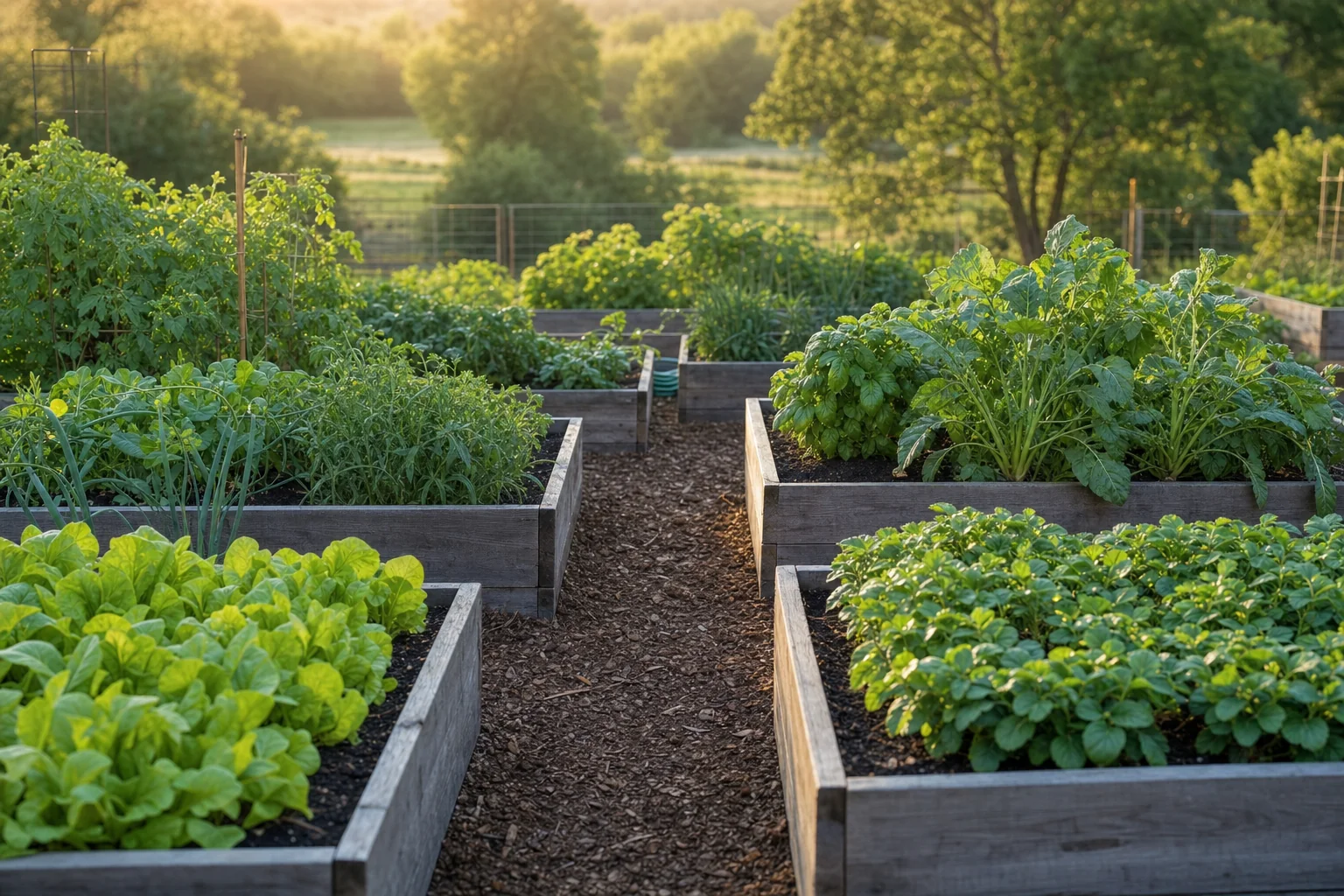
Same bed size, same drip tape, same tomato varieties, same mulch. Biochar? Maybe. Peat? Random “soil boosters” in shiny tubs? Hard pass.
Not fancy. Not new. Annoyingly effective. It didn’t make one crop go wild while doing nothing elsewhere.
Specific advantage: it’s easy to source, easy to spread, and better than the mystery “compost” bags that look like dyed mulch and smell like a wet pallet.
Specific disadvantage: bagged compost gets expensive fast if you’re filling multiple new beds.
Specific advantage: the 4-6-2 ratio is friendly for general vegetable use, especially when you don’t want to slam greens with nitrogen and get floppy growth.
Specific disadvantage: it’s fertilizer, not magic soil. If your bed is compacted, hydrophobic, or basically contractor fill with sadness mixed in, this won’t fix the structure by itself. The guy was nice. The soil was not. It crusted after rain, grew peppers the size of ping-pong balls, and turned into brick by August. Fertilizer helped a little. Compost fixed it over time. (Still choosing a bed? to 6 p.m. in June, less by late September when the maple starts being rude. Lettuce was more of a “how many salads before it bolts?” situation, which is less scientific but extremely relevant when you’re standing in the kitchen at 6 p.m. Finished compost
2. Compost and manure blend
3. Worm castings
4. Granular organic fertilizer
5. Biochar
6. Leaf mold
7. Peat moss/coir-style moisture amendments
The beds were not identical clones by the second season. Soil is alive. Weather cheats.
Compost: boring, cheap-ish, and still the winner
Compost won because it solved more than one problem.
That’s the thing with raised beds. People often treat them like giant pots, and then they wonder why the soil gets tired. A bed grows food hard for six or seven months. You pull biomass out of it constantly. Tomatoes, squash, lettuce, herbs, roots. All that fertility leaves in baskets.
Compost puts some of it back. It also improves texture. Same drip line. Same schedule. The compost bed stayed crumbly under the straw mulch.
Not good. For a 4x8 bed, that’s roughly two to three cubic feet for a proper spring top-dress. See current price at the link, because bagged soil pricing has gotten goofy and changes by region.
What didn’t work: using compost that wasn’t finished.
Finished compost smells earthy. Not sour. Not like ammonia. Not like a wet chicken coop. The Espoma blend fits here. Thick leaves. Good color. Fewer of those sad yellow lower leaves you get when brassicas are hungry and you’re pretending they’re not.
Carrots in that bed forked more than the carrots in the leaf mold bed. Was it the manure blend? Maybe. Could’ve been the bed texture.
For tomatoes, peppers, kale, cucumbers, and corn? Great.
For baby greens? Too much richness can make soft growth, and soft growth is aphid bait. Actually, don’t.
Worm castings: excellent, but don’t be ridiculous
Worm castings helped most when used near seedlings and transplants.
They did not justify dumping a whole expensive bag over an entire bed. Well, half-tried.
The peppers did well. But not $40 better.
The bed with castings had noticeably better early growth. Lettuce sized up faster. Basil recovered from transplant shock quicker. Tomatoes rooted nicely.
By August, though, the compost bed and compost-plus-fertilizer bed had caught up. They’re fantastic as a targeted amendment. Not the main meal.
Use them like seasoning. Good salt, not the whole soup.
What didn’t work: cheap castings that were mostly peat. It was light, fluffy, and looked nothing like real castings. Real worm castings are dark, dense, and almost greasy-feeling when damp. That cheap bag behaved like filler. Never again.
Granular organic fertilizer: not soil building, but absolutely useful
A lot of gardeners get weirdly moral about fertilizer. Like if you use a bagged organic fertilizer, you’ve failed the soil food web.
Compost feeds the bed. Fertilizer feeds a demanding crop when the bed can’t keep up. Those are different jobs. Not the tallest plants. Not the most leaves. But the fruit set was steady, and the plants didn’t hit that pale-green midsummer slump.
Specific disadvantage: it needs soil biology and moisture to break down. If you sprinkle it on dry soil and walk away, don’t expect miracles by Friday.
That last part matters.
Organic granular fertilizer isn’t instant like blue liquid fertilizer. If it sits dry on the surface, the dog sniffs it, the birds investigate it, and the plants don’t get much benefit. Raised beds are easy to overdo because drainage is good and the soil volume is limited. Natural doesn’t mean gentle if you dump enough of it in one place.
For a deeper breakdown of when fertilizers are amendments and when they’re just plant food, the soil amendments guide has the longer version.
The tomatoes in that bed were smaller for the first month. Basil was unimpressed. Lettuce was fine but not better.
Charged means soaked or mixed with compost, worm tea, urine diluted heavily — yes, gardeners are weird — or another nutrient-rich source so the char’s pore spaces aren’t empty. Empty biochar can tie up nutrients short-term. Which was not often.
That version worked better. The cucumber bed with charged biochar held moisture nicely and didn’t crash as hard in late summer. Was it better than compost alone? Slightly, maybe.
Specific advantage: long-term structure and moisture buffering, especially in sandy or fast-draining mixes.
Specific disadvantage: expensive, dusty, and easy to misuse if you add it raw.
Wear a mask when handling dry biochar. Charming.
Leaf mold: the quiet sleeper amendment
Leaf mold is just decomposed leaves. No branding. No label promising explosive roots. Just leaves that sat long enough to turn soft and crumbly.
And honestly?
The leaf mold bed didn’t produce the heaviest tomatoes. But carrots loved it. Lettuce loved it. The soil surface stayed loose, and water soaked in beautifully. The mower does the shredding. Whole leaves take forever.
Leaf mold is lower in nutrients than compost, so don’t expect it to feed heavy crops by itself. Think of it as a texture and moisture amendment. For raised beds that dry out fast, that matters a lot.
Where it worked best:
- Carrots
- Lettuce
- Spinach
- Cilantro
- Newly seeded beds
- Beds that crust after rain
What didn’t work: using thick, fresh leaf layers mixed into the soil in spring. The bed stayed cold and weirdly matted. Slugs loved it. Seeds did not.
Fresh leaves belong on top as mulch or in a pile to rot. Leaf mold belongs in the bed. Same with coconut coir.
For starting a new bed from scratch, especially if you’re mixing compost, mineral soil, and aeration material, peat or coir can help with moisture. But as an annual amendment for established raised beds?
The peat-amended bed held water, yes. Almost too well in spring. Lettuce was fine. Tomatoes sulked early when the bed stayed cool and damp after a rainy May.
Coir was better behaved but didn’t add fertility. It improved fluff for a while, then seemed to disappear into the general soil mass by the next season. Not bad. Just not exciting.
And there’s the sustainability side. Coir is a byproduct, which sounds great, but it’s often shipped a long way and can vary in salt content unless it’s properly rinsed. Your mileage may vary.
Specific advantage of peat/coir: moisture retention and texture in new mixes.
Specific disadvantage: little nutrition, questionable sustainability depending on source, and not the best use of money for yearly raised bed refreshing.
What was an expensive waste?
The biggest waste wasn’t one product. It was using the right material in the wrong way. Bare soil gets hot, crusty, and dry. You can add the best compost on earth, but if July sun is baking the surface all day, you’re fighting yourself.
Now almost every bed gets mulch after seedlings are established. The soil underneath stays alive longer. Worms come up. Water actually goes where it should.
The best soil amendment raised beds 2026 answer has to include that boring truth: amendments work better when the bed is covered. Pull old crop debris, but leave roots when they’re not diseased.
2. Broadfork if the bed feels compacted. No flipping. Just lifting.
3. Add 1 inch finished compost.
4. Add leaf mold if the bed is drying too fast or crusting.
5. Add targeted fertilizer for heavy feeders only.
6. Use worm castings in transplant holes, not across the whole bed.
7. Mulch after soil warms and seedlings are growing well. Soil first. Then feed.
Skip worm castings as a full-bed amendment.
Skip peat unless you’re building a new mix and have a specific reason.
Skip anything labeled as a “yield booster” that doesn’t clearly say what’s in it. Plants don’t need vibes. They need organic matter, minerals, water, air, and a gardener who remembers to thin the beets. Homemade if you can. Bagged if you must. Local bulk compost if you trust the source — and that “if” is doing work. Ask about herbicide contamination. Ask what goes into it. If they look at you like you’re being difficult, maybe be difficult somewhere else. Could’ve been persistent herbicide. Could’ve been something else. Finished compost — best all-around amendment for raised beds.
2. Compost and manure blend — excellent for hungry crops, use carefully around roots.
3. Leaf mold — best texture/moisture helper, especially for greens and carrots.
4. Granular organic fertilizer — very useful, but not a compost replacement.
5. Worm castings — great targeted boost, too expensive for broad use.
6.
7.
So yes, the best soil amendment raised beds 2026 choice is still compost. If that sounds too simple, good. Simple is usually what survives actual gardening.
The garden aisle wants you to believe every problem needs a new bag. Sometimes it does. Most of the time, your bed needs more finished organic matter, steady moisture, mulch, and a little restraint.
Restraint is the hard one.