When to Fertilize Garlic in Spring Guide
Learn exactly when to fertilize garlic in spring, why nitrogen must stop when scapes appear or bulbing starts, and how to side-dress without soft bulbs.
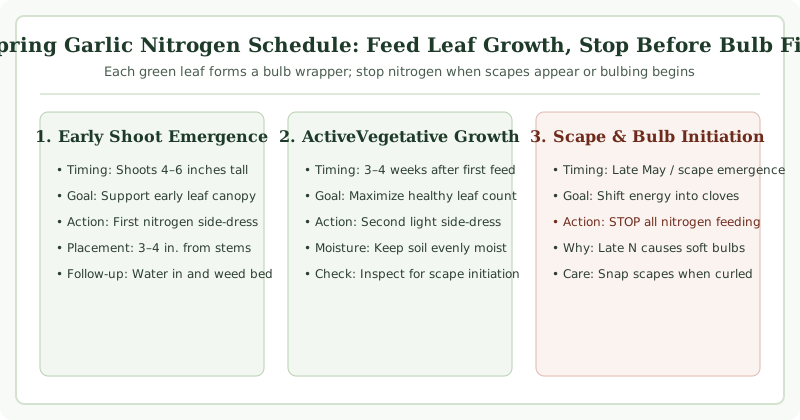
Fertilize fall-planted garlic with a nitrogen-focused side-dressing in early spring as soon as shoots reach 4 to 6 inches tall, optionally repeat once 3 to 4 weeks later during active leaf growth, and stop all nitrogen applications by mid-May or as soon as bulbing begins and flower scapes appear.
Every large garlic head starts as a stack of green leaves in April and early May. Because each full-sized green leaf forms one protective wrapper layer and feeds thedeveloping cloves at its base, early-spring nitrogen availability directly governs final bulb diameter. However, applying nitrogen too late in the spring is one of the fastest ways to ruin a garlic harvest—producing thick necks, split wrappers, and soft bulbs that sprout or rot in storage.
Why Spring Timing Matters More Than Fertilizer Quantity
University of Minnesota Extension’s garlic growing guide explains that fall-planted garlic goes through two distinct physiological stages once snow melts and soil warms:
- Vegetative Leaf-Building Stage (Early Spring to Mid-May): Triggered by warming temperatures, the overwintered root system pushes rapid vertical leaf growth. During this window, garlic has a high demand for available nitrogen (
N), while microbial activity in cold spring soil is still slow to mineralize organic matter. - Bulb Initiation & Clove Fill Stage (Mid-May Through Harvest): Triggered by lengthening daylight hours (photoperiod) and rising soil temperatures, the plant stops initiating new leaves and redirects carbohydrates from the foliage down into the basal plate to swell individual cloves.
If nitrogen is deficient in early April, the plant produces fewer, narrower leaves and smaller bulbs. Conversely, if excess nitrogen is applied after mid-May when the plant is supposed to transition into bulbing, Cornell Cooperative Extension’s garlic production notes warn that the plant stays in vegetative mode—diverting energy into lush tops instead of dense cloves.
The Three-Stage Spring Garlic Feeding Calendar
Use plant growth stages alongside your local frost calendar rather than relying on a fixed date alone:
| Growth Stage | Visual Plant Cue | Typical Northern Window | Fertilizer Action | Target Nutrient Focus |
|---|---|---|---|---|
| Stage 1: Early Emergence | Green shoots are 4–6 inches tall; mulch pulled back slightly if matted | Late March to mid-April | Apply first spring nitrogen side-dressing | Readily available Nitrogen (N) |
| Stage 2: Canopy Expansion | 5–7 true leaves present; rapid vertical growth | Late April to early May (3–4 weeks after Stage 1) | Apply second light side-dressing if soil is sandy or low in organic matter | Nitrogen (N) + consistent soil moisture |
| Stage 3: Scape / Bulb Initiation | Hardneck scape tip appears in center whorl; lower leaf tips may lightly yellow | Mid-May onward (4–6 weeks before harvest) | Stop all nitrogen. Keep evenly watered until 2–3 weeks before harvest | Zero nitrogen; moisture management only |
How to Side-Dress Garlic in a Raised Bed
Before reaching for a high-nitrogen amendment, check what went into the bed in autumn. As covered in our fall raised bed garlic, greens, or cover crop guide, beds amended with finished compost at fall planting usually have sufficient phosphorus (P) and potassium (K), which remain relatively stable in the root zone over winter. Nitrogen, however, leaches readily with winter rain and snowmelt.
Step-by-Step Side-Dressing Method
- Pull back heavy winter mulch slightly along the row: Keep 1 to 2 inches of straw or shredded leaves for weed suppression, but expose a narrow strip of soil 3 to 4 inches away from the garlic stems so granular fertilizer contacts the soil rather than sitting dry on top of straw.
- Weed before feeding: Oregon State University Extension’s home garden garlic guide emphasizes that garlic has a shallow, non-branching root system and competes poorly with spring weeds. Hand-pull winter annual weeds before applying nitrogen so you do not fertilize the weeds.
- Band the fertilizer 3 to 4 inches from the stems: Sprinkle your measured nitrogen source along the row without piling granules against the emerging pseudostem, which can burn tender tissue.
- Scratch lightly and water in: Gently scratch the granules into the top half-inch of soil—staying shallow to avoid slicing garlic roots—and water thoroughly so dissolved nitrogen moves into the root zone.
Choosing an Organic Spring Nitrogen Source
In cold April soil (below 55°F), slow-release complex proteins take weeks for soil microbes to break down. Penn State Extension’s soil fertility guidance notes that spring side-dressing works best when the nitrogen source becomes available while leaves are actively forming:
- Blood Meal (Typically 12-0-0): One of the fastest-mineralizing dry organic nitrogen sources for early spring. Because it is concentrated, follow label rates carefully (often 1 to 2 tablespoons per 10 square feet or per 10-foot row) to avoid over-application.
- Feather Meal (Typically 12-0-0 to 13-0-0): Releases nitrogen slightly more gradually than blood meal; best applied at the very first sign of shoot emergence in March or early April so it breaks down during April leaf growth.
- Balanced Organic Granular Blends (such as 3-4-4 or 4-6-3): Useful at fall planting or on beds that did not receive autumn compost, though their lower nitrogen percentage means they release more slowly in cold spring soil. Compare general bed options in our best organic fertilizer for raised beds guide and best soil amendments for raised beds.
Diagnosing Yellow Garlic Leaves Tips in Spring
Not every yellow leaf tip in April or May calls for extra fertilizer:
- Cold or Frost Tip Burn (March–April): If only the very tips (top ½ to 1 inch) of the oldest leaves turn yellow or white after a hard spring freeze while new center leaves emerge deep green, the cause is cold exposure—not starvation. Do not double the fertilizer dose.
- Uniform Pale Green Foliage in Wet Spring Soil: Heavy spring rain can leach nitrate below the shallow 6-inch root zone or waterlog poorly drained soil. Check soil drainage first; if the mix drains well and you have not side-dressed yet, apply your scheduled spring nitrogen feeding.
- Lower Leaves Yellowing in June: Once bulbing is underway in June, the lowest 2 to 3 leaves naturally yellow and dry from the bottom up as the plant remobilizes nutrients into the wrappers. Adding nitrogen at this stage will not re-green old lower leaves and will harm bulb curing.
Comparing Spring Nitrogen Supplies
When selecting an organic nitrogen amendment for spring garlic beds, verify the guaranteed N-P-K analysis on the bag and calculate the square footage of your planted rows before applying. You can search Amazon for Espoma Organic Blood Meal fertilizer to compare package sizes and label directions for raised-bed side-dressing.
Products in this guide
Espoma Organic Blood Meal Fertilizer
Amazon search for Espoma Organic Blood Meal fertilizer. Check guaranteed nitrogen analysis (typically 12-0-0), application rate per square foot, and package weight before ordering.
Find matching listings on Amazon →Search results may include other models. Check the model and size before buying.