Rude Insect
vegetable-gardening

The Best Lettuce Companion Plants (Shade, Pest Cover, and Spacing)

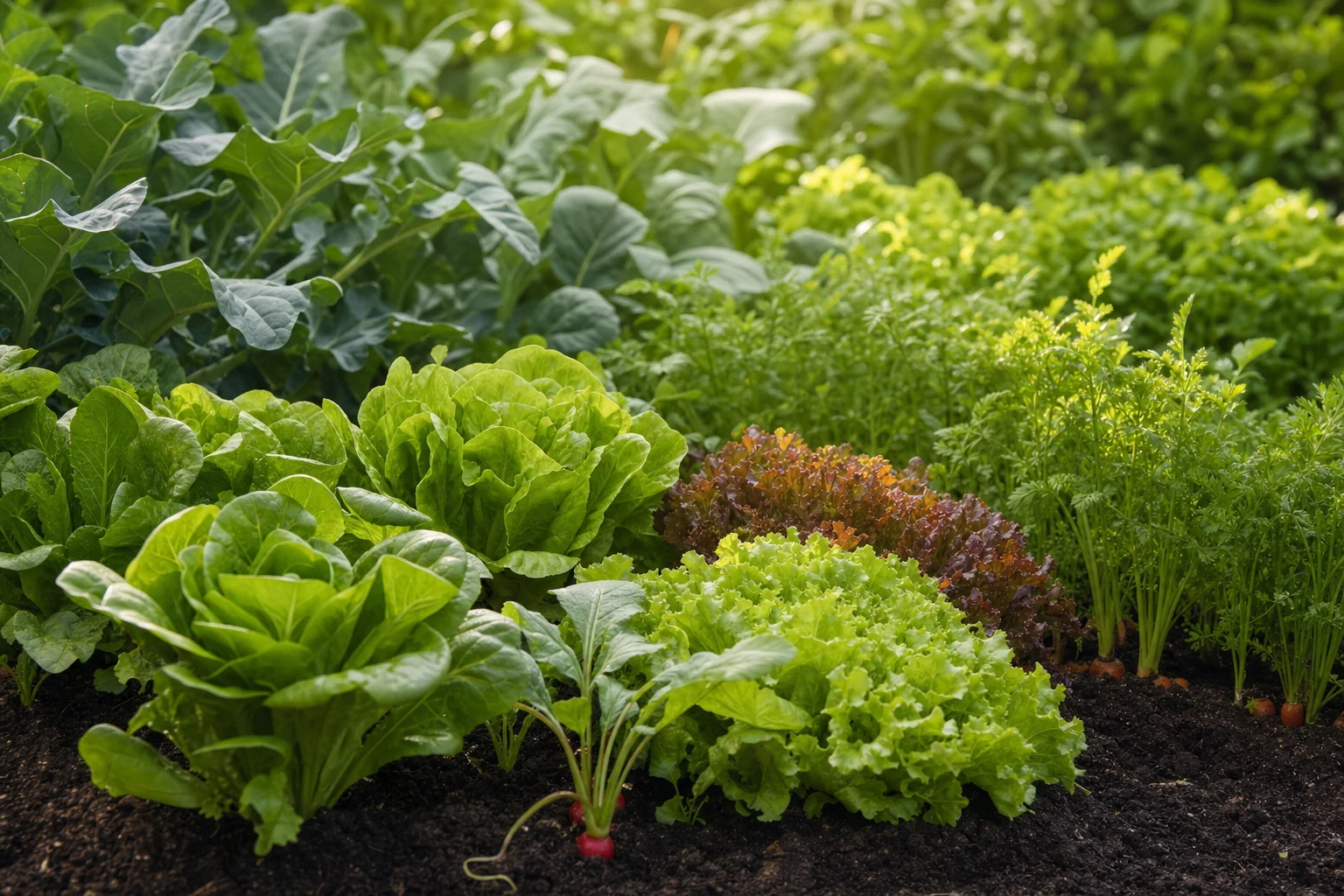
Lettuce likes good neighbors more than most crops — the tall companions that gave it afternoon shade into early summer, the carrots and radishes that shared

By Rude Insect

Like this garden guide? Subscribe to Rude Insect on YouTube for more hands-on growing videos.

Subscribe on YouTube
The Best Lettuce Companion Plants (Shade, Pest Cover, and Spacing)
Disclosure: This post contains affiliate links. If you buy through them, Rude Insect earns a small commission at no extra cost to you. We only recommend products we’d use ourselves.

If I were retitling this from our actual beds, I’d call it 7 Lettuce Companion Plants We Actually Use in 2025 — Not the Ones That Crowd the Row. Lettuce companion plants sound fussy until you grow spring lettuce next to the wrong thing and watch it bolt, mildew, or get buried under cabbage leaves. We’ve grown lettuce in raised beds, half barrels, seed trays, and one ugly plastic storage tote with holes drilled in the bottom. The best neighbors weren’t magical. They gave lettuce a little shade, left its shallow roots alone, or got harvested before the heads needed elbow room.

Lettuce is a fast crop, but it’s also a soft one. Thin leaves. Shallow roots. No patience for hot afternoons. In our Zone 6b garden, the May lettuce looks smug and perfect, then June shows up and everything wants to turn bitter by lunchtime.

That’s where companion planting earns its keep.

Not the Pinterest version where basil “likes” tomatoes and everything gets a cute label. I mean practical bed-sharing: radishes marking rows, carrots slipping between lettuce plants, peas throwing light shade, onions confusing pests a bit, and row cover doing the boring work when the flea beetles wake up.

For a wider crop-pairing map, I keep notes in our vegetable companion planting guide, but lettuce deserves its own page because it behaves differently than tomatoes, squash, or beans. Lettuce doesn’t need a bodyguard as much as it needs good timing.

Lettuce companion plants that earned their space

The best lettuce companion plants in our garden have one thing in common: they don’t bully the lettuce.

That sounds obvious. It wasn’t obvious to us in 2018, when we tucked romaine between broccoli transplants because “cool-season crops go together.” The romaine germinated beautifully. Then the broccoli leaves flopped over them like wet beach towels. We got six sad little heads and a slug hotel.

Never again.

Now I think about lettuce companions in three groups:

  • quick crops that leave early
  • skinny-root crops that share space politely
  • taller crops that cast afternoon shade without stealing the whole bed

That’s the whole trick.

Radishes: the easiest lettuce companion, unless flea beetles are already bad

Radishes are probably my favorite lettuce companion because they do two jobs at once.

First, they mark the row. Lettuce can take its sweet time coming up when the soil is cool, especially butterhead types. Radishes pop fast. I’ll sow a pinch of radish seed every 6 inches along the lettuce row, then harvest them while the lettuce is still thinking about whether it wants to be a plant.

Second, they’re gone early. That matters.

I like radishes with leaf lettuce more than heading lettuce because leaf lettuce can be cut around them. With tight romaine spacing, radishes sometimes make the row too crowded if you get lazy about pulling them. Ask me how I know.

If you’re restocking seed, a basic pack of Radish Seeds for companion planting is enough — see current price. The advantage is simple: radishes are fast, cheap, and easy to succession sow. The downside is just as real: if your garden already has flea beetles, radishes can attract them like a dinner bell. In 2024, our early radishes looked like someone peppered them with a BB gun.

Would I still plant them with lettuce? Yes. But I cover the bed now.

The boring product I use more than I want to admit: floating row cover

Floating row cover is not charming. It photographs badly. It blows into the neighbor’s yard if you forget the bricks.

Still useful.

For lettuce, I use it in two situations: early spring cold snaps and pest pressure. It won’t fix poor spacing, bad soil, or a hot June week, but it buys you cleaner leaves. And cleaner leaves mean less time standing at the sink swishing aphids out of salad. I have spent enough of my life doing that.

A basic Floating Row Cover for Lettuce is worth having — see current price. Specific advantage: it physically blocks pests when the edges are pinned down. Specific disadvantage: it traps heat on sunny days, and lettuce hates that once temperatures climb. I’ve cooked baby greens under row cover in late May. Not proud of it.

Use hoops if you can. Even cheap 9-gauge wire hoops are better than letting the fabric sit directly on baby lettuce. When row cover rests on leaves after rain, slugs get cozy underneath. The cover protects from above; the slugs attack from below. Very rude.

Carrots share the row better than they get credit for

Carrots and lettuce are a nice pairing because they occupy the bed differently.

Lettuce lives shallow and wide. Carrots go down. Not as perfectly as garden diagrams suggest — roots are not polite little plumbing systems — but close enough.

We sow carrots in a band about 4 inches from leaf lettuce, not directly underneath it. The lettuce grows fast, shades the soil, and helps carrot seed stay damp during germination. That part matters because carrot seed is fussy. If the top half-inch dries out, germination gets patchy.

The failure here: I once sowed carrots too thick between two rows of romaine and then didn’t thin them. By harvest time the romaine was fine, but the carrots came out as orange shoelaces. Edible, technically. Annoying, definitely.

For spacing, this works better:

  • leaf lettuce: 6 to 8 inches apart
  • romaine: 8 to 10 inches apart
  • carrots: a narrow band 3 to 4 inches away from lettuce, thinned hard
  • baby lettuce mix: broadcast lightly, with carrots on the edge instead of through the middle

If you hate thinning carrots, don’t pair them with lettuce. You’ll resent the whole bed.

Peas give the best kind of shade — light, early, and temporary

Peas are one of the better tall lettuce companion plants because they don’t cast the heavy, smothering shade that squash or brassicas do.

We run snap peas on a 5-foot cattle panel in one bed, then plant lettuce on the east side in April. By late May, the peas give the lettuce a little afternoon relief. Not deep shade. Just enough. The lettuce stays sweeter for maybe an extra week, sometimes two if the weather behaves.

Honestly, your mileage may vary. If your spring goes from 52°F to 88°F overnight, no companion plant is saving that lettuce. It’s going to bolt and lecture you about it.

But in a normal spring, peas help.

The trick is not planting lettuce right at the base of the pea trellis. Give it 10 to 12 inches. Pea roots are not huge, but the bottom of a trellis gets crowded with stems, tendrils, dropped flowers, and whatever weeds you missed.

And don’t plant heading lettuce on the north side of peas unless your sun angle supports it. We tried that. Too dim. Loose heads, longer stems, more slug damage.

Onions, scallions, and chives: useful, but don’t expect miracles

Alliums are often recommended as lettuce companion plants because their smell may help confuse pests. Maybe. I’m not 100% sure how much credit they deserve.

What I do know: scallions fit beautifully between lettuce plants.

They’re narrow. They don’t shade much. They’re easy to pull as needed. We tuck scallion starts around the corners of lettuce blocks, especially where there would otherwise be wasted space near drip lines.

Chives work too, but give them a permanent edge spot. Don’t plant a mature chive clump in the middle of a lettuce bed unless you enjoy digging around a woody root mass later. Chives are perennials pretending to be dainty. They are not.

Onions from sets are less useful with close lettuce because they need more room than people think. If you’re growing actual bulb onions, give them their own lane.

Beets are fine. Swiss chard is pushing it.

Baby beets beside lettuce? Fine.

Full-size beet rows crammed into lettuce? Meh.

We’ve done both. Baby beets work because you pull them young, and their leaves don’t get huge if you keep harvesting. Full-size beets can shade lettuce more than expected, especially if you’re growing a vigorous variety and feeding the bed well.

Swiss chard is where I draw the line. I know some gardeners pair it with lettuce. In our beds, chard gets too big too fast. It also drops those broad leaves over the lettuce after rain, and the trapped moisture invites slugs.

If you’re growing lettuce for baby greens, chard nearby isn’t a crisis. If you’re trying to grow full heads, I’d skip it.

Herbs that work around lettuce — and the ones I stopped using

Dill near lettuce is good if you let it live on the edge of the bed. Not in the row. Dill bolts, flowers, leans, and generally behaves like it owns the place. But the flowers bring in tiny beneficial wasps and hoverflies, and I’ll take all the help I can get.

Cilantro is similar. It grows fast in cool weather, bolts when it warms, and offers light shade if you time it right. We use cilantro as a “temporary roof” for looseleaf lettuce in one spring bed. By the time cilantro is flowering, the lettuce is usually on its last harvest.

Parsley is slower and better behaved, but it can sit in the ground forever. I don’t like it right inside a lettuce block because it outlasts the crop and makes bed cleanup awkward.

Mint? Absolutely not in the ground. I don’t care what companion chart says. Mint belongs in a pot, on concrete, watched with suspicion.

Lettuce seed choice matters more than people admit

Companion planting won’t rescue lettuce that’s wrong for the season.

For early spring, I like romaine, butterhead, and looseleaf mixes. For late spring, I lean toward looseleaf and summer-crisp types if I can get them. In fall, almost everything tastes better again because the plant isn’t fighting heat.

A Lettuce Seed Variety Pack is a good way to test what handles your garden — see current price. Specific advantage: you can trial several lettuce types without buying six separate packets. Specific disadvantage: variety packs can be uneven if you don’t know exactly what cultivars are included, and you may find one type thrives while another sulks.

We sow lettuce every 10 to 14 days in spring instead of planting one heroic bed all at once. One big planting sounds efficient. Then everything matures the same week, and you’re begging neighbors to take salad.

Been there.

For more crop timing notes, our succession planting and companion planting guide ties lettuce into the bigger vegetable calendar.

Spacing lettuce companion plants without making a mess

Here’s the spacing we actually use. Not perfect. Just tested enough that I don’t have to think too hard on a Saturday morning.

For leaf lettuce with radishes: sow lettuce in a 4-inch band, then put radishes along one edge every 3 to 4 inches. Pull radishes early.

For romaine with carrots: romaine at 8 to 10 inches, carrots in a narrow row 4 inches away. Thin carrots once they’re big enough to grab.

For lettuce under peas: lettuce 10 to 12 inches from the pea trellis, preferably on the east side if afternoon sun is the problem.

For lettuce with scallions: scallions every 4 to 6 inches around the outside of the lettuce patch, not right in the crown space.

For lettuce with dill or cilantro: herbs at the ends of the bed or at least 12 inches away. They get bigger than you think.

The most common mistake is treating lettuce like filler. It can be filler when it’s baby greens. It cannot be filler when you want heads.

A full head of butter lettuce needs room. Romaine needs even more vertical air movement or the inner leaves stay damp and gross. Crowded lettuce also hides slugs. And slugs are lazy geniuses. They will find the wettest, darkest spot and wait.

The companions I don’t plant with lettuce anymore

Brassicas are the big one.

Cabbage, broccoli, cauliflower, Brussels sprouts — yes, they share cool-season timing with lettuce. No, that doesn’t make them good neighbors in a small bed.

A newly transplanted cabbage looks innocent. Six weeks later it’s a leafy umbrella with ambitions. Lettuce underneath gets shaded too heavily, airflow drops, and slugs move in. We had one bed where the lettuce looked fine from the path, but when I lifted the cabbage leaves, half the heads were chewed at the base.

No thanks.

Tomatoes can work later in spring if you use lettuce as a temporary crop before the tomatoes size up. I do this sometimes. But tomatoes are not a season-long lettuce companion in our garden. Once tomatoes start pumping growth, they take the water, space, and light. Plant lettuce early, harvest it young, and get out.

Squash is worse. Don’t do it. Zucchini leaves are dinner plates. In 2024, aphids destroyed our zucchini anyway, but before that happened the plants had already swallowed everything within 3 feet.

Potatoes are another one I avoid. Hilling potatoes around lettuce is awkward, and harvesting potatoes tears up the bed. Lettuce does not appreciate being excavated.

Patio lettuce and the MP1 planter setup

Not everyone has a 14-bed kitchen garden or even a decent in-ground spot. Lettuce is one of the few vegetables I actually like in containers because it has shallow roots and doesn’t need a huge soil volume if you stay on top of water.

That “if” is doing a lot of work.

Lettuce in pots dries out fast. A hot afternoon on a deck can turn perfect baby lettuce into limp green tissue paper.

The Smart Modular Planter with App Control and Automatic Water Cycling (MP1) is the kind of setup I’d consider for patio lettuce, especially if you travel or forget watering on busy days — see current price. Specific advantage: automatic water cycling is genuinely useful for lettuce because uneven moisture is one of the fastest ways to get bitter, stressed plants. Specific disadvantage: it’s more system than you need if you already have raised beds and a drip line.

The Solar System with Panel and Battery(Suitable for MP1) makes the most sense if your planter spot isn’t near an outlet — see current price. Advantage: it pairs with the MP1 for a more flexible placement. Disadvantage: it’s an extra piece of gear, and if your lettuce is already near power or you’re growing in the ground, you probably don’t need it.

For indoor starts or winter salad experiments, the LED Growing Light system (Suitable for MP1) is the more tempting add-on — see current price. Advantage: lettuce seedlings need bright, steady light to avoid stretching. Disadvantage: indoor lettuce still needs airflow, good spacing, and your attention. A light won’t fix soggy planting mix or crowded seedlings.

I’d pick the planter first, then decide on solar or lights based on where you’re actually growing. Don’t buy the whole stack because it looks tidy. Buy the piece that solves the problem you have.

Shade is helpful. Deep shade is not.

This is where lettuce companion plants get misunderstood.

Lettuce likes cool soil and relief from harsh sun. It does not want to grow in a cave.

Morning sun with afternoon shade is the sweet spot for us once late spring hits. A pea trellis, a row of scallions, or a loose stand of cilantro can help. A cabbage canopy cannot. There’s a difference between filtered shade and being buried alive.

If lettuce starts stretching upward, leaning, or making thin pale leaves, it needs more light. If it wilts every afternoon but perks up at night, it needs cooler roots, steadier water, or afternoon cover. Those are different problems.

We mulch around spring lettuce with shredded leaves when plants are about 3 inches tall. Earlier than that, mulch can smother seedlings or give slugs a hiding place. Straw works too, but the bagged straw we bought one year came with grain seed in it, and I spent May pulling mystery grass out of lettuce. Irritating.

My practical lettuce companion planting plan

If I were planting one 4-by-8 bed for spring lettuce, I’d do this:

One short end gets peas on a trellis. Lettuce goes 10 inches out from the trellis, not pressed against it. Radishes go along the lettuce edge as row markers. Carrots get one narrow band beside the leaf lettuce. Scallions tuck around the corners. Dill goes at the far end, where it can flower without flopping over the salad.

Then I’d cover the whole thing with floating row cover until the lettuce is established and pest pressure drops.

That’s the setup I trust.

Not because every plant is “friends.” Plants don’t care about our labels. It works because harvest timing, root depth, shade, and airflow line up well enough.

If you’re building out companion layouts for the rest of the garden, the bigger companion planting chart for vegetables is useful. But for lettuce, keep it simple: fast neighbors, skinny neighbors, light shade, no bullies.

Our Top Picks

Smart Modular Planter with App Control and Automatic Water Cycling (MP1)

Smart Modular Planter with App Control and Automatic Water Cycling (MP1)

Check Price Check Price →
Solar System with Panel and Battery(Suitable for MP1)

Solar System with Panel and Battery(Suitable for MP1)

Check Price Check Price →
LED Growing Light system (Suitable for MP1)

LED Growing Light system (Suitable for MP1)

Check Price Check Price →
📦

Lettuce Seed Variety Pack

Check Price Check Price →
📦

Radish Seeds (Companion)

Check Price Check Price →
📦

Floating Row Cover for Lettuce

Check Price Check Price →

Frequently Asked Questions

What are the best lettuce companion plants?
The best lettuce companion plants we’ve grown are radishes, carrots, peas, scallions, cilantro, dill, and baby beets. Radishes and carrots share rows well, peas give light shade, and scallions fit around the edges without crowding. I’d avoid big brassicas if you’re trying to grow full lettuce heads.
Can I plant lettuce with tomatoes?
Yes, but treat the lettuce as an early crop. Plant lettuce near young tomatoes in spring, harvest it before the tomatoes get large, and don’t expect it to thrive there all summer. Once tomatoes size up, they take too much light and water for lettuce to stay happy.
Does lettuce need shade from companion plants?
In spring, lettuce usually wants full sun. As weather warms, afternoon shade helps slow wilting and bolting. Light shade from peas, cilantro, or a trellis works well. Deep shade from cabbage, squash, or crowded tomatoes usually causes weak growth and slug problems.
Are radishes good companion plants for lettuce?
Yes, radishes are excellent with lettuce because they germinate quickly, mark the row, and get harvested before lettuce needs full space. The one caution is flea beetles. If flea beetles are bad in your garden, use floating row cover early.
What should not be planted with lettuce?
I avoid planting lettuce with cabbage, broccoli, cauliflower, squash, and potatoes. They either crowd the lettuce, shade it too heavily, or make harvesting awkward. Lettuce is shallow-rooted and soft-leaved, so it does best with companions that leave early or stay narrow.
How close can companion plants be to lettuce?
For leaf lettuce, small companions like radishes or scallions can be 3 to 6 inches away if you harvest them early. Romaine and butterhead need more room — usually 8 to 10 inches per plant. Tall companions like peas should be about 10 to 12 inches away so they give shade without smothering the lettuce.