Rude Insect
container-gardening

Why Won't My Tomatoes Fruit in Containers? (Blossom Drop Fixed)

Potted tomatoes flower and then nothing — the blossoms drop before setting fruit. We tracked down the five causes that hit container gardeners hardest in

By Rude Insect
Why Won't My Tomatoes Fruit in Containers? (Blossom Drop Fixed)
Disclosure: This post contains affiliate links. If you buy through them, Rude Insect earns a small commission at no extra cost to you. We only recommend products we’d use ourselves.

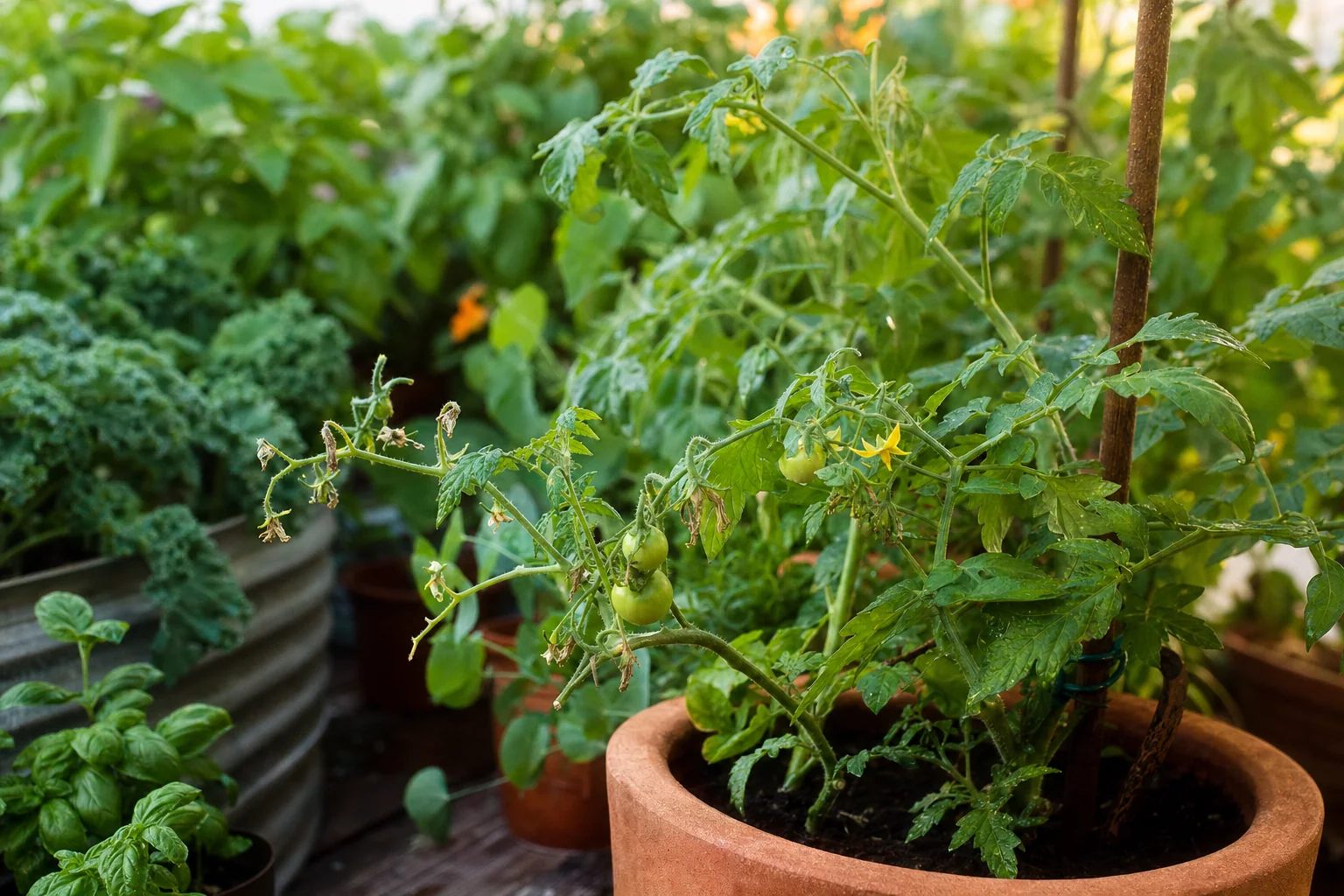
If you’re asking why wont my tomatoes fruit after they’ve been flowering like mad, you’re probably looking at blossom drop — flowers open, look perfectly hopeful for a few days, then dry up at the little stem and fall off. We’ve had it happen in 5-gallon buckets, fabric bags, a railing planter that was a dumb idea from the start, and one very dramatic balcony tomato that bloomed for three weeks before setting a single fruit. Containers make tomatoes fussier. Not impossible. Just less forgiving.

Our worst year was on a south-facing patio where the pots sat against brick. The plants looked fine at 8 a.m. By 3 p.m., the leaves were canoeing, the potting mix had pulled away from the sides, and every new flower was basically doomed. We fixed it, but not with one magic product. It took cooler roots, steadier water, a little buzzing, and not treating container tomatoes like in-ground tomatoes.

Why wont my tomatoes fruit in containers? Usually because the flowers never finish the job

Tomato flowers need a decent little window of comfort to turn into fruit. They don’t need bees as badly as cucumbers or squash — tomatoes are self-pollinating — but they do need pollen to loosen inside the flower and land where it belongs.

That breaks down fast in pots.

The roots get hotter. The soil dries unevenly. Nutrients wash out with every watering. A plant that would shrug off a hot afternoon in the ground can drop blossoms in a black plastic pot sitting on concrete.

Here’s what we check first when a potted tomato is flowering but not fruiting:

  • Hot days and warm nights
  • Water swinging from bone-dry to soaked
  • No vibration or wind for pollination
  • Calcium/magnesium issues, especially in peat-heavy mixes
  • A pot that’s too small for the plant

And yes, sometimes it’s more than one. Annoying, but true.

If you’re growing more than tomatoes in pots, our broader container gardening guide is where I’d start for soil, watering, and setup basics. Tomatoes just happen to show every mistake louder than most crops.

Heat stress: the blossom-drop bully

Tomatoes are dramatic about heat, especially in containers. Once daytime temperatures get up around the sticky, punishing part of summer — and especially when nights stay warm — pollen can get weird. Flowers open, but they don’t pollinate well. Then they yellow at the stem and drop.

We saw this hard with ‘Sungold’ and ‘Roma’ in black nursery pots on concrete. Same patio, same watering, same plants. The one in a lighter fabric pot set fruit first. The black pot plant grew leaves like a champ and shed flowers like confetti.

Not scientific. But it happened enough that we stopped using black plastic nursery pots for summer tomatoes unless we could shade the pot itself.

Move the pot if you can. Morning sun and late-afternoon shade beats all-day blasting heat on a balcony. Tomatoes still need plenty of light, but roots cooking inside a container is different from leaves getting sun.

Shade the container, not the whole plant. We’ve used:

  • A scrap piece of lattice leaned against the pot
  • A folded burlap coffee sack
  • A white nursery tray propped on the sunny side
  • Other pots grouped around the tomato pot

Looks messy. Works.

Mulch the top of the potting mix too. A 1-inch layer of shredded leaves or straw slows the drying. Don’t pile it against the stem. Tomatoes can tolerate a buried stem when planted, but wet mulch packed tight around the base in a pot gets funky.

If your tomato is in a tiny dark pot and it’s July, I wouldn’t baby it forever. I’d up-pot or start fresh with a better container next season.

The Fabric Grow Bags 5-Gallon (Tomato-Optimized) are a solid low-cost fix for small determinate or dwarf tomatoes: see current price. Their advantage is air pruning and cooler sides compared with hard black plastic. The downside? Five gallons is still tight for a big indeterminate tomato, and fabric bags dry faster in wind. We use 5-gallon bags for patio types, peppers, and backup cherry tomatoes — not for a full-size ‘Cherokee Purple’ unless we’re watering like it’s a second job.

Water swings: the quiet reason your flowers bail

This is the one people don’t want to hear because it means changing habits, not buying a cute tool.

Container tomatoes hate inconsistency. Dry Monday, flooded Tuesday, dry Wednesday — that cycle stresses the plant, and stressed plants often drop blossoms before they commit to fruit.

We used to water by “does the top look dry?” Bad system. The top inch can look dusty while the lower pot is still wet, or the top can look damp after a sprinkle while the root zone is dry as toast.

Now we do the finger test and the lift test.

Stick a finger down 2 inches. If it’s dry there, water deeply. If it’s cool and damp, wait. For grow bags, lift the edge. After a week you’ll know the difference between “fine” and “uh oh.”

When you water, water until it runs out the bottom. Then stop. Don’t give three polite little sips per day unless you’re running drip irrigation on purpose.

Our container tomato watering rhythm

In mild weather, a 5-gallon tomato may need water every other day.

In July heat, it may need water every morning.

On a windy balcony, it may need water morning and evening. Honestly, your mileage may vary more with wind than heat. We learned that the dumb way on a third-floor balcony where the plants looked like they’d spent the day in front of a hair dryer.

If water shoots straight out the drainage holes immediately, the potting mix may be hydrophobic. Peat-based mixes do that when they dry too far. Set the pot in a shallow tub for 20–30 minutes so it can rehydrate from below, then drain it. Don’t leave tomatoes sitting in water all day.

A good potting mix matters here. Garden soil in pots is a brick. Cheap “topsoil” bags are usually worse. We filled one balcony tomato container with bargain topsoil our first year because it was $2 cheaper per bag. Disaster. It compacted, stayed wet at the bottom, crusted on top, and the plant grew like it resented us personally.

For fresh containers, I’d rather start with a Premium Potting Mix for Containers and Raised Beds: see current price. The advantage is structure — it drains and holds air better than yard soil. The disadvantage is that nutrients don’t last forever, especially with daily watering, so you still need a feeding plan.

If you want a deeper setup walkthrough, the container gardening guide covers why drainage holes, mix texture, and pot placement matter more than the pretty pot.

Poor pollination: the easiest fix, and the one that saved our balcony crop

Tomato flowers don’t need a bee landing on each flower, but they do need vibration. Outdoors, wind often handles it. Bumblebees are even better because they buzz the flower. On a sheltered porch or balcony, flowers can sit there looking productive while nothing much happens.

This was our exact problem two summers in a row. Tons of yellow flowers. No fruit. The plants were tucked into a protected balcony corner because that was the only sunny spot. Great for keeping them from snapping in storms. Bad for pollen movement.

The fix was embarrassingly simple.

We buzzed the flowers.

The hand-pollination trick

Do it in the morning, after the flowers are open and before the day gets brutally hot.

Hold the flower cluster gently. Tap the stem with an electric toothbrush, or use a pollinator wand, for one or two seconds. You don’t need to beat the plant. You’re just vibrating the flower enough to shake pollen loose inside it.

We did this every other morning for about a week. Fruit started setting. Not every flower, but enough that the plant finally stopped being ornamental.

You can also flick the flower stems with your finger. That works. We’ve done it. But for a balcony full of tomatoes and peppers, a little wand is easier and more consistent.

The Electric Pollinator Wand (for Tomatoes and Peppers) is useful if your plants are sheltered, indoors, in a greenhouse, or on a balcony with poor airflow: see current price. The advantage is targeted vibration right where the flower needs it. The disadvantage is that it won’t fix heat stress or watering problems. If the pollen is cooked, buzzing won’t magically make it viable.

And don’t pollinate soaking-wet flowers. We’ve tried after a rain because we were impatient. Didn’t do much.

Calcium deficiency — and the blossom drop confusion

Calcium gets blamed for everything tomato-related. Sometimes fairly. Sometimes not.

Classic calcium trouble shows up as blossom end rot: the bottom of the fruit turns brown and leathery. That’s not the same thing as blossoms dropping before fruit forms.

But container tomatoes can still run into calcium and magnesium problems, especially when watering is inconsistent. Calcium moves with water through the plant. If the roots dry out, then get flooded, then dry out again, the plant may not move calcium reliably even if calcium is technically present in the mix.

So if someone asks why wont my tomatoes fruit and also mentions yellowing leaves, weak growth, or previous blossom end rot, I look at watering first and nutrients second.

Don’t dump eggshells on the pot and expect a miracle

We use eggshells in compost. Fine. But crushed eggshells sitting in a tomato pot won’t break down fast enough to save this week’s flowers.

Same with milk. Please don’t pour milk in your tomato containers. It smells exactly how you think it smells after a hot day.

For potted tomatoes, a balanced tomato fertilizer that includes calcium and magnesium is more practical. The Tomato Fertilizer with Calcium & Magnesium is the one category I’d prioritize if your potting mix is older or you’re watering daily: see current price. The advantage is that it addresses the common container tomato nutrient gap without relying on slow kitchen scraps. The disadvantage is that overfeeding can push leafy growth at the expense of flowers, so follow the label and don’t get cute with double doses.

We feed container tomatoes lightly but regularly once they start blooming. Not a heavy blast. More like steady groceries.

If your plant is dark green, huge, and flowering poorly, check nitrogen. Too much nitrogen makes a tomato act like it’s training for a leaf competition. Big plant. Few fruit. We’ve done that too with composted chicken manure in a pot. Beautiful monster. Almost no tomatoes.

Pot size: yes, it matters more than you hoped

A tomato can survive in a small pot. That doesn’t mean it will fruit well.

Small pots heat faster, dry faster, and run out of nutrients faster. The plant spends all day recovering from stress instead of setting tomatoes.

For container tomatoes, here’s the rough size guide we actually use:

  • Dwarf tomato: 3 to 5 gallons
  • Patio/determinate tomato: 5 to 10 gallons
  • Full-size indeterminate tomato: 10 gallons minimum, 15+ is better

Can you grow an indeterminate in a 5-gallon bucket? Yes. People do. We’ve done it. But you’ll water constantly, feed carefully, and still get more blossom drop in heat. If you’re asking why wont my tomatoes fruit and the plant is 5 feet tall in a 5-gallon pot, the pot is part of the problem.

Also, drainage holes. Not one tiny hole. Several real holes. We drill 3/8-inch holes in buckets and don’t feel bad about it.

Fabric bags vs. plastic pots

Fabric bags breathe. That helps with root health and overheating. It also means they dry out faster. Plastic pots hold moisture longer, which is nice if you forget to water, but they can get hot and swampy depending on the setup.

Our pick? Fabric for hot patios if we can water daily. Larger plastic or resin containers for windy balconies where fabric bags dry out too quickly.

For most new container tomato growers, I’d start with a 10-gallon container if space allows. If you’re stuck with 5 gallons, choose a patio tomato, not a giant heirloom that wants to become a shrub with opinions.

The five-minute diagnosis I use before changing anything

When a tomato flowers and drops every blossom, don’t throw five fixes at it on the same day. You’ll never know what worked.

Check these in order.

First: temperature. Are days hot and nights warm? Is the pot sitting on concrete or against brick? Shade the pot and stabilize watering.

Second: moisture. Is the mix dry 2 inches down by mid-afternoon? Are leaves wilting every day? Water deeply and mulch.

Third: pollination. Is the plant sheltered from wind? Are you seeing flowers but no tiny green fruit swelling behind them? Buzz the flowers in the morning.

Fourth: nutrients. Is the plant pale, weak, or growing in old potting mix? Feed with a tomato fertilizer that includes calcium and magnesium.

Fifth: pot size. Is the plant massive and the pot small? Up-pot if the season is early enough. If it’s late summer, keep it alive and do better next year. No shame. We’ve all grown a tomato in a bucket that should’ve been a basil pot.

What I’d buy first — and what I’d skip

If I were fixing one struggling container tomato today, I’d buy potting mix first only if the current mix is bad or compacted. Bad soil ruins everything downstream.

For an existing plant that’s already flowering, my first purchase would usually be the Tomato Fertilizer with Calcium & Magnesium — again, see current price — because container nutrients wash out fast and it’s an easy correction. But I’d only use it after fixing the watering pattern.

Second would be the Electric Pollinator Wand if the plant is on a balcony, screened porch, greenhouse bench, or any spot with dead-still air: see current price. That little buzzing trick has saved us twice. I’m not sentimental about gadgets, but this one earns its drawer space.

For new plantings, start with the Premium Potting Mix for Containers and Raised Beds: see current price, then choose the right pot. The Fabric Grow Bags 5-Gallon are fine for compact tomatoes: see current price. I would not use them as my first choice for a huge indeterminate unless space or budget forced the issue.

What would I skip? Blossom set sprays, unless you already know what you’re doing with them. They can help in certain conditions, but they don’t fix the root problems in containers. I’d rather correct heat, water, pollination, and pot size.

Also skip “more fertilizer” as a panic move. More is not the same as better. Tomatoes are rude that way.

A simple recovery plan for this week

Here’s the plan I’d use if your potted tomato is flowering and dropping blossoms right now.

Day one: water deeply in the morning. Check drainage. If water runs straight through a bone-dry pot, bottom-soak it for 20–30 minutes and let it drain.

Same day: shade the pot during the hottest part of the afternoon. Not the whole plant unless it’s truly frying. Just protect the root zone.

Day two: buzz open flowers in the morning with an electric toothbrush, pollinator wand, or finger taps. Repeat every other morning while new flowers are open.

Day three: add mulch to the pot surface. One inch is enough.

Day four or five: feed lightly with a tomato fertilizer that includes calcium and magnesium, following the label. Don’t feed a drought-stressed plant before watering it back to normal.

All week: keep moisture steady. That’s the boring part. It’s also the part that works.

If the plant is in a too-small pot and it’s still early summer, up-pot carefully. Water first, transplant in the evening, and expect it to sulk for a couple of days. If it’s late summer, I’d probably leave it alone and manage water/heat instead. Transplant shock in August can be worse than the small pot.

And if a heat wave is coming? Don’t judge the plant during that week. Tomatoes often pause. Once nights cool a little, fruit set can start again like someone flipped a switch.

For more container setup fixes — especially if your peppers, cucumbers, or herbs are acting weird too — the container gardening guide has the general rules that keep pots from turning into little stress boxes.

Our Top Picks

📦

Fabric Grow Bags 5-Gallon (Tomato-Optimized)

Check Price Check Price →
📦

Tomato Fertilizer with Calcium & Magnesium

Check Price Check Price →
📦

Premium Potting Mix for Containers and Raised Beds

Check Price Check Price →
📦

Electric Pollinator Wand (for Tomatoes and Peppers)

Check Price Check Price →

Frequently Asked Questions

Why wont my tomatoes fruit even though they have lots of flowers?
Most of the time, the flowers aren’t pollinating successfully or the plant is dropping them from stress. In containers, the usual causes are heat, inconsistent watering, poor airflow, nutrient issues, or a pot that’s too small. Start with water and heat before adding fertilizer.
Do tomato plants in containers need to be hand-pollinated?
Not always. If they’re outdoors with wind and insects, they may pollinate fine on their own. But balcony tomatoes, greenhouse tomatoes, and plants tucked against a wall often set more fruit if you vibrate the flower clusters in the morning with a finger tap, electric toothbrush, or pollinator wand.
Can too much fertilizer cause tomatoes not to fruit?
Yes. Too much nitrogen can make a tomato grow big, dark green leaves while setting very little fruit. For containers, use a tomato fertilizer with calcium and magnesium, but follow the label. Don’t double up because the plant looks “hungry.”
Is a 5-gallon grow bag big enough for tomatoes?
A 5-gallon grow bag can work for dwarf or compact patio tomatoes. It’s tight for full-size indeterminate tomatoes, especially in hot weather. If you want fewer watering problems and better fruit set, 10 gallons or more is easier.
Should I remove flowers when my container tomato is stressed?
If the plant is newly transplanted, badly wilted, or recovering from drying out, pinching a few flowers can help it focus on roots for a short time. But on an established plant, I usually fix the stress first and let the next round of flowers decide.
Will blossom drop fix itself?
Sometimes. If the problem is a short heat wave, tomatoes often start setting fruit again when temperatures ease. If the issue is a tiny pot, dry soil, or poor pollination, it usually won’t fix itself until you change the growing conditions.